


+.png)
【Trauma-Informed Care Services】When a Mother Has No One to Turn To, Understanding Comes First
What We See is Only the Tip of the Iceberg
Xiao-Zhi's teacher called again today — the third time this week. She is worried that Xiao-Zhi often struggles to focus in class and sometimes disrupts other students.
After school, his mother usually arrives late to pick him up. While waiting, Xiao-Zhi sometimes plays around in the security office or runs and climbs around the campus. One day, he nearly fell off a basketball hoop, frightening the security guard.
Xiao-Zhi's mother divorced his father when Xiao-Zhi was still in kindergarten. After drinking, his father would often become violent and shout at both of them. She eventually left her hometown and began raising Xiao-Zhi on her own.
Without family support, her work has been unstable. She changes jobs frequently, and her living situation often shifts along with her relationships. I have tried many times to talk with her, but it has been difficult. I often find myself chasing after her for updates, and messages left on “read” without a reply are common.
Resistance is Also a Form of Communication
Today, I finally had the chance to meet Xiao-Zhi's mother in person. I seized the opportunity and quickly asked many questions — where she and Xiao-Zhi were currently staying, what kind of work she was doing, and how she arranged his meals and school pick-ups.
I also mentioned that teachers had recently noticed Xiao-Zhi struggling at school and hoped she could pay closer attention to his situation. As I spoke, her face flushed and then darkened. Yet she remained silent and refused to respond. I felt anxious and unsure what to do next.
Shifting Perspectives — What Has She Been Through?
Later, I learned that Xiao-Zhi's mother had also experienced a difficult childhood. She and her own mother once fled from an unemployed father who struggled with alcohol addiction. They moved frequently, and she had to change schools again and again before eventually dropping out.
Watching her mother rely on different partners for support, she decided to leave home and become independent while still a minor.
Over the years, she worked in physically demanding jobs to support her family. However, those jobs eventually caused chronic health problems that affected her ability to earn a stable income.
Even during times of deep financial hardship, she never gave up caring for Xiao-Zhi.
Moving Forward Together Through Empathy
At our next meeting, I tried something different. I let go of my anxiety about gathering and delivering information. Instead, I first asked about her rest, her free time, and how she had been sleeping after work.
I told her sincerely that I admired the effort she put into caring for both herself and Xiao-Zhi. I could see how hard she was trying to be a good parent, and I could also see the loneliness and exhaustion she carried. I wanted her to know she did not have to face these challenges alone — that we could walk through them together.
Her tense expression slowly softened.
For Xiao-Zhi's mother, the idea of being supported felt unfamiliar. Asking for help did not fit with the resilience she had built from carrying her family's burdens alone for so many years. She felt she could not show weakness or trust others easily, because past trust had too often led to disappointment.
When I began to understand these unspoken fears, I tried to see things from her perspective and connect her with different community resources. Step by step, both she and Xiao-Zhi began to see themselves as individuals with their own voices and choices. Gradually, trust and a sense of safety began to grow.
Stability Brings a Sense of Security
After working together for some time, Xiao-Zhi's mother was able to find stable housing and a steady job. With the support of the school counselor and his homeroom teacher, Xiao-Zhi gradually began adjusting to school life.
There are still moments when both mother and child react with intense emotions during parenting challenges or conflicts. However, they are learning new ways to cope — stepping away from stressful situations, closing their eyes to calm down, and practicing other strategies to regulate their emotions and bodies.
Healing from trauma is a long journey. But I believe Xiao-Zhi and his mother have already begun the path toward recovery.
*To protect the privacy of the family, identifying details in this case have been changed.
Understanding Trauma — Creating Safer Relationships to Love and Be Loved
"Trauma is not only an individual experience. It is shaped by families, communities, and even broader social and cultural systems. Healing should never be seen as an individual responsibility — every part of this context deserves to be understood."
Every child will face stress, hardship, or painful experiences while growing up. These experiences can shape how children behave and how they respond to the world around them.
When we see a child acting out, instead of asking, "What's wrong with you?" we can ask a different question: "What happened to you?" By understanding the experiences behind a child's behavior, we can respond with greater care and stability. When children feel safe and supported, they are less likely to be hurt again.
Trauma does not exist in isolation. It is shaped by families, communities, and the broader society. That is why we encourage a more integrated way of understanding trauma — one grounded in empathy, awareness, and supportive relationships where people can learn to love and be loved more safely.
Trauma-Informed Care Services — Walking with Children on the Path to Healing
"Through our work, we have come to understand the importance of attachment. Early childhood experiences shape how our brains develop. When infants experience neglect or maltreatment, the resulting trauma can affect both mental and physical health later in life. With this perspective, we are better able to support both children and adults in our services."
Research shows that Adverse Childhood Experiences (ACEs) can have lasting effects on physical and mental health. A nurturing environment — one that prevents further harm — can play a critical role in helping trauma survivors move toward recovery.
To support children and youth on this journey, we provide Trauma-Informed Care Services through a cross-sector team that integrates social work, medical care, and psychological support.
Our approach includes:
- Trauma-informed practice
We train professionals in trauma-informed care so they can respond with openness, flexibility, and empathy. Our work focuses on rebuilding safe and supportive networks for trauma survivors and their families. - Integrated multidisciplinary support
Based on each family's needs, our team connects them with medical care, counseling, guidance, and a range of therapeutic approaches to provide coordinated and holistic support.
Building a Trauma-Informed Community — Healing Begins with Understanding
"When we understand trauma and the nervous system, we realize how important it is for people to feel safe and stable. When our bodies and minds feel regulated, we are better able to connect with others and engage in learning."
The Trauma-Informed Care Resource Center works to connect domestic and international resources and build a Trauma-Informed Care Network. Through various social media and communication platforms, we invite the public to understand trauma, recognize its impact, and respond with trauma-informed knowledge — becoming practitioners of trauma-informed care in everyday life.
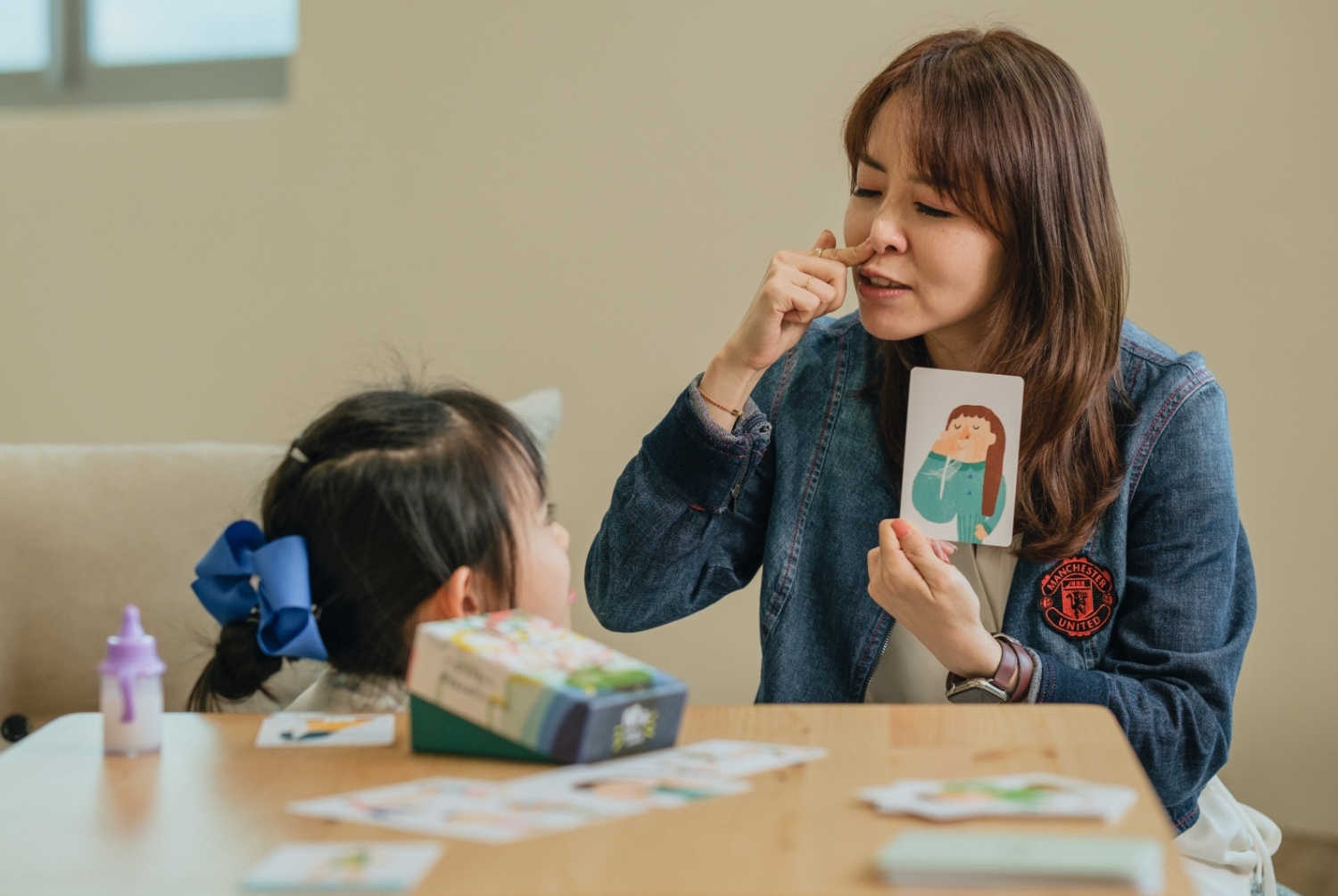
Key initiatives include:
- Developing locally relevant resources
Creating culturally grounded educational videos, body–mind regulation tools such as Now Card, and customized teaching materials. - Education and outreach
Providing trauma-informed care training, producing podcasts and media programs, and collaborating across sectors to promote trauma-informed learning. - Learning from global experiences
Compiling international trauma-informed resources and translating licensed educational materials for local use.
Beyond professional training, we also promote public education on trauma-informed care. Our goal is to help build a trauma-informed society where children can grow up in environments that are safe, stable, and nurturing.
▶ Child Trauma and Resilience Center
▶ Promotion and Connection of Trauma-Informed Care Services
▶ Trauma-Informed Care Network
▶ Buy Now Card here
◼︎ More CWLF stories:
【Children in Rural Areas Services】The Boy Who Rides a Unicycle in Confidence
【Children in Rural Areas Services】Quan: The Boy Who Builds a Wall Around His Heart
【Family in Adversity Services】From Storm to Strength: How Fang-Fang's Family Found Hope Again