


CWLF Survey: School Choice Feels Life-or-Death as 57% of Students Face Learning Fatigue
As private junior high school entrance exams approach in Taipei and New Taipei City, admission rates at some prestigious schools have fallen to the single digits, making competition nearly as fierce as that for top universities. Within this high-pressure selection system, the core purpose of compulsory education is being challenged, and parents' expectations are increasingly turning into a heavy burden for children.
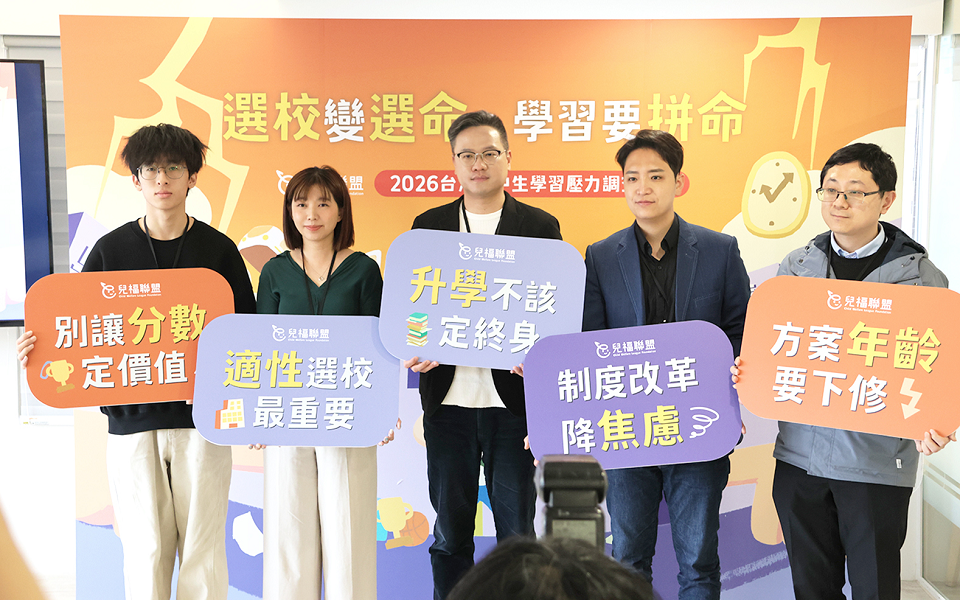
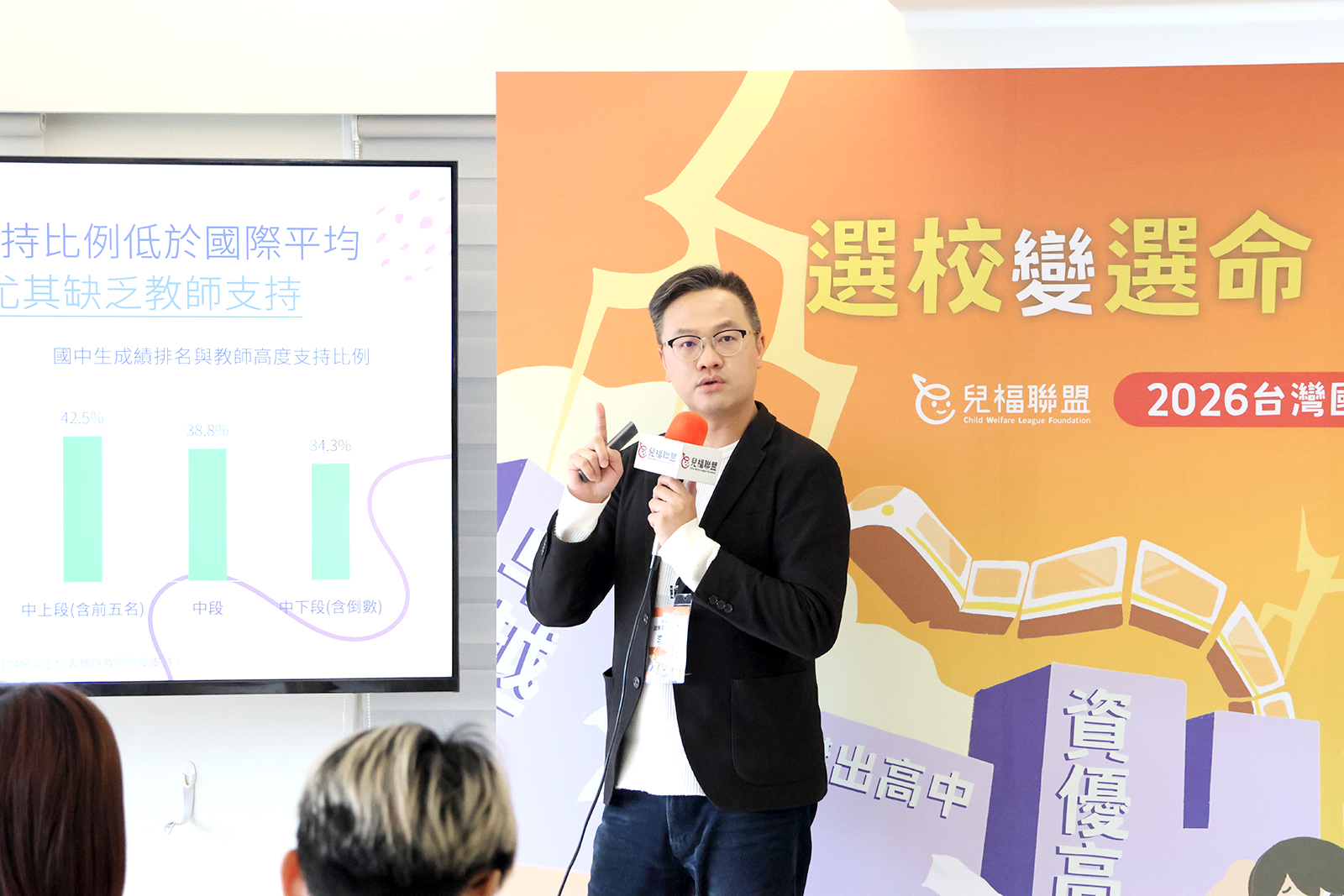
Ahead of this entrance exam, Child Welfare League Foundation (CWLF) held a press conference on March 2, 2026 titled "Choosing a School, Choosing a Fate: When Learning Becomes a Fight for Survival." At the event, CWLF Deputy Director Hong-Wen Li (李宏文) presented the 2026 Survey on Academic Pressure Among Junior High School Students in Taiwan [1]. Legislator Ya-Lin Chang (張雅琳), Legislator Ting-Wei Lo (羅廷瑋), EdYouth Taiwan Executive Director Chen-Hsiang Hung (洪振翔), and National Taipei University of Education Professor Po-Lin Chen (陳柏霖) from the Department of Psychology and Counseling also joined the discussion. Together, they examined how this "survival game" created by an increasingly narrow path to higher education can become the final straw that breaks children's physical and mental well-being, and explored ways to ease the pressure.
CWLF's survey shows that the rate of learning fatigue among junior high school students in Taiwan climbed to 19.2% in 2026. Instead of declining, it has risen over the past decade, with nearly 57% of students across the country experiencing moderate to severe fatigue. Long commutes, academic overload, and frequent exams have left only 20% of students getting the recommended eight hours of sleep. Private school students face even more pronounced disruption to their daily routines and higher stress levels than those in public schools. Most concerning of all, nearly 30% of junior high school students have experienced thoughts of self-harm under the weight of academic pressure. Meanwhile, the education system's safety net appears to be failing. CWLF's survey found that teacher support for junior high school students in Taiwan falls below the international average, and that teachers, like parents, may also differentiate their care based on academic performance. When under academic pressure, nearly one in four adolescents are unwilling to seek help, while 15% turn to generative AI and 10% seek comfort from online friends.
Under intense academic pressure, warning signs related to learning fatigue and mental health are becoming increasingly common among junior high school students. CWLF urges the government to lower the eligibility age for the Young Adults Mental Health Support Program to 12 so that resources can reach adolescents earlier, during this critical stage of emotional distress. More fundamentally, schools and parents must move away from grade-driven ways of interacting with children so they can be freed from the internal strain of constant score-based competition. Whether public or private, the right school environment is one that can support children's emotions and nurture their individual development.
[1] The survey was conducted online at the end of 2025 by CWLF, and a total of 2,021 valid responses were collected. To ensure the findings were meaningful and informative, public schools were contacted through official administrative letters, while purposive sampling was used to recruit students from popular private schools. The sample consisted of 90.5% public school students and 9.5% private school students; by grade, 37.2% were seventh graders, 25.2% eighth graders, and 37.6% ninth graders; the gender distribution was nearly even, with 48.4% male, 49.8% female, and 1.8% other.
1. Academic Pressure Keeps Rising, with One in Five Junior High Students Experiencing Severe Learning Fatigue
2. High-Pressure Schooling Is Disrupting Junior High Students' Daily Routines, with Private School Students Facing Longer Days, More Frequent Exams, and More Severe Sleep Deprivation Than Public School Students
3. Teenagers' Daily Lives Are Ruled by Grades, While Some Parents Have Grown Used to Conditional Love
4. Comparing Resources and School Environments: Private Schools Score Higher Than Public Schools in Both Facilities and Overall Satisfaction
5. High Teacher Turnover Is Affecting More Than 40% of Junior High Students' Learning, While Nearly One in Four Students Facing Emotional Distress Seek No Help at All
6. CWLF Urges the Government to Lower the Eligibility Age for Mental Health Support, and Calls on Parents and Schools to Reflect on Grade-Driven Ways of Interacting with Children
Academic Pressure Keeps Rising, with One in Five Junior High Students Experiencing Severe Learning Fatigue
CWLF's survey shows that learning fatigue [2] among junior high school students in Taiwan has worsened in recent years. The rate of severe learning fatigue has gradually risen from 15.3% in 2011 to 19.2% in 2026. In other words, children’s academic pressure has not eased over the past 15 years. Even more concerning, nearly 57% [3] of junior high school students across Taiwan are now experiencing at least moderate levels of fatigue. The survey further found a significant association between learning fatigue and academic performance. Among students ranked in the lower-middle and bottom tiers of their class, the rate of severe fatigue was as high as 24.1%, far above the 16.9% recorded among top-performing students. This suggests that students who have long struggled academically are bearing the most intense and uneven physical and mental strain.
[2] This study used a learning fatigue scale adapted from the Maslach Burnout Inventory–Student Survey (MBI-SS). The scale consisted of 13 items covering areas such as physical and psychological symptoms and academic workload. It demonstrated good reliability and validity, with a Cronbach's alpha of 0.89. Total scores ranged from 0 to 39, with higher scores indicating more severe fatigue. Scores of 10 to 19 were defined as moderate fatigue, while scores of 20 or above were classified as severe fatigue, or learning burnout.
[3] The findings showed that 56.7% of junior high school students were experiencing at least moderate fatigue, including 37.5% with moderate fatigue and 19.2% with severe fatigue.
High-Pressure Schooling Is Disrupting Junior High Students' Daily Routines, with Private School Students Facing Longer Days, More Frequent Exams, and More Severe Sleep Deprivation Than Public School Students
Under this kind of high-pressure competition, frequent exams and long commutes are taking a toll on children's daily routines and physical well-being. CWLF's survey found that 64.7% of junior high school students take exams in three to five subjects each day, while 16.8% take exams in more than six subjects in a single day. Beyond academic demands, commuting has also become a hidden source of stress. Although 50.6% are able to get to school within 15 minutes, 6.8% of junior high school students spend more than an hour each day commuting to and from school. In this environment, only 20.8% students get the eight hours of sleep recommended by experts each day, while 19.5% get less than six hours of sleep.
CWLF further found stark differences in daily routines between private and public school students. Among private school students, 23.8% spend more than an hour commuting each day, nearly five times the rate among public school students. In addition, as many as 58.5% of private school students do not leave school until after 7 p.m., a figure nearly ten times higher than that of public school students (5%). CWLF noted that these demanding academic schedules also contribute to higher rates of sleep deprivation among private school students, with 54.4% getting fewer than seven hours of sleep, compared with 44.3% of public school students.
Chen-Hsiang Hung (洪振翔), Executive Director of EdYouth Taiwan, cited data from Taipei City Government's Department of Information Technology showing that fewer than 20% of schools in Taipei are following the “normalization of teaching” standards, meaning that more than 80% may be improperly using students' self-study time. Drawing on his own experience, he said that many junior high school students begin morning study sessions at 7:30 a.m. and do not leave school until 7:30 p.m., spending 12 hours on campus before going home to do more homework and prepare for exams. "That is simply too much for a junior high school student to bear," he said. He called on junior high schools to follow the example of high schools by making morning self-study optional rather than mandatory.
Teenagers' Daily Lives Are Ruled by Grades, While Some Parents Have Grown Used to Conditional Love
When academic performance becomes tied to self-worth, children can begin to fear that they are worthy of love only when they do well. CWLF's survey found that nearly 67.6% of students feel their grades fall short of their own expectations, while 51% admitted that their mood for the entire day is directly shaped by how well they score.
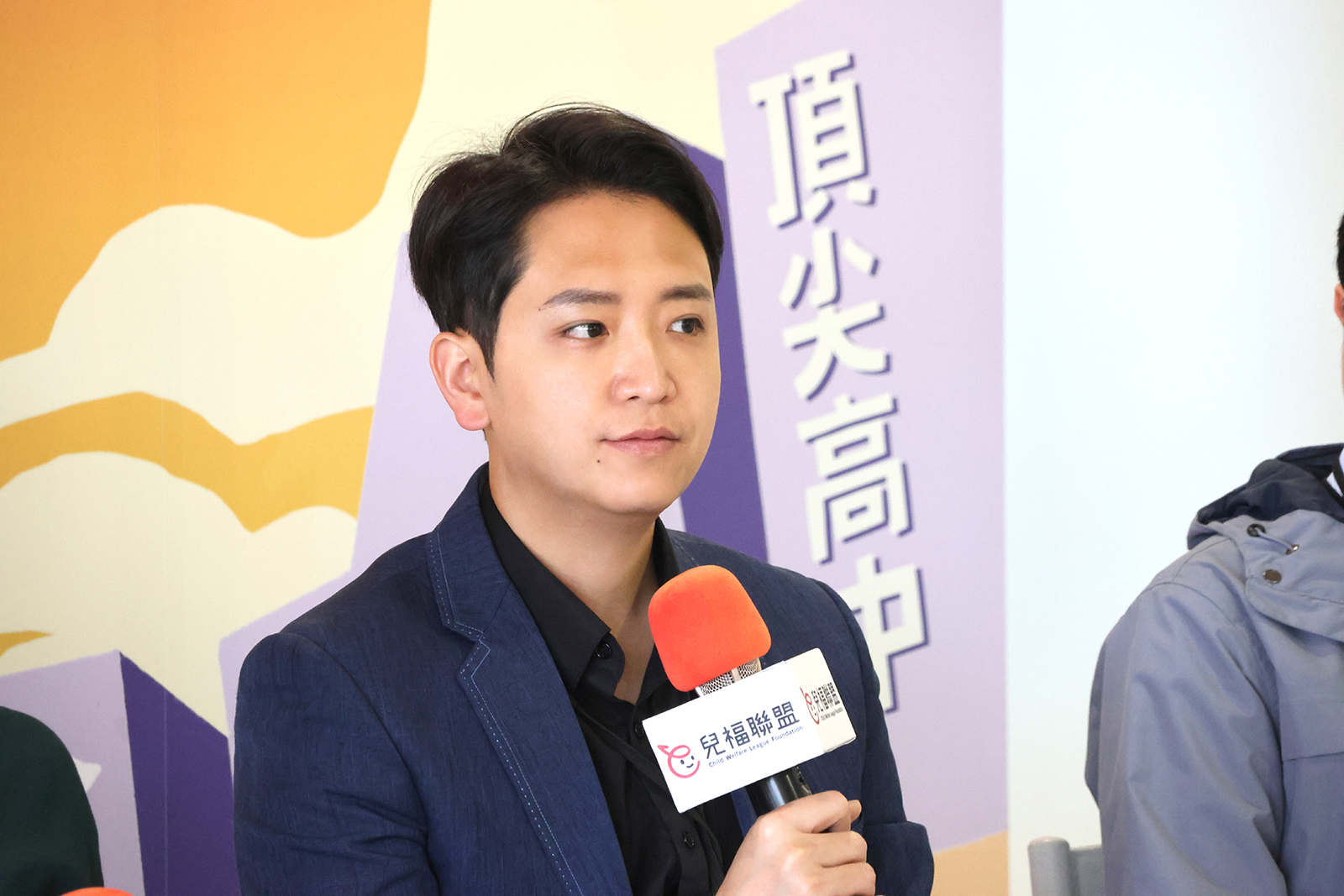
Even more concerning, family support also seems to shift depending on academic performance. As many as 44.4% of students said they clearly feel less valued by their parents when their grades are not ideal. In a family environment shaped by this kind of grade-first mindset, children can easily come to feel that their parents' love is conditional. Legislator Ting-Wei Lo (羅廷瑋) pointed out that, in the face of academic pressure, parents should shift their focus away from the child as an individual problem and instead see it as a process the whole family must go through together. He emphasized, "parents should look for a school that is right for their child, rather than chasing the name that sounds the most impressive."
Professor Po-Lin Chen (陳柏霖) further explained that many parents today are just as anxious as their children, and that this pressure can spread to students through emotional contagion. He noted that many parents are living under intense pressure themselves without fully realizing it, and suggested that both parents and children need time and space for self-care. Professor Chen stressed, "a child's emotional well-being matters more than academic performance." If children are able to build a sense of belonging at school and adapt well to their environment, their long-term learning outcomes are likely to be better. By contrast, placing too much emphasis on academic achievement can undermine the joy of learning. He also suggested that social and emotional learning (SEL) should not be limited to students alone. Parents should take part as well if families are to address these cycles of stress at their root.
Comparing Resources and School Environments: Private Schools Score Higher Than Public Schools in Both Facilities and Overall Satisfaction
Despite the intense academic pressure, the survey data also reveals the structural factors behind the growing preference for private schools. CWLF noted that, in evaluations of the school environment, private junior high schools scored higher than public junior high schools across every indicator. The most notable gaps were in the richness of school activities, where private schools scored 4.1 compared with 3.7 for public schools, and in campus facilities, where private schools scored 3.6 versus 3.2. Private schools also outperformed public schools in curriculum diversity and peer friendliness, scoring 3.6 and 3.8 respectively, compared with 3.4 for public schools on both measures. These findings highlight the advantages private schools hold in both resource allocation and campus climate.
When choosing a school for their children, parents are often weighing physical and emotional strain against the quality of the school environment. The resource advantages seen in private schools are exactly the kinds of benchmarks public schools can look to as they work to improve overall quality.
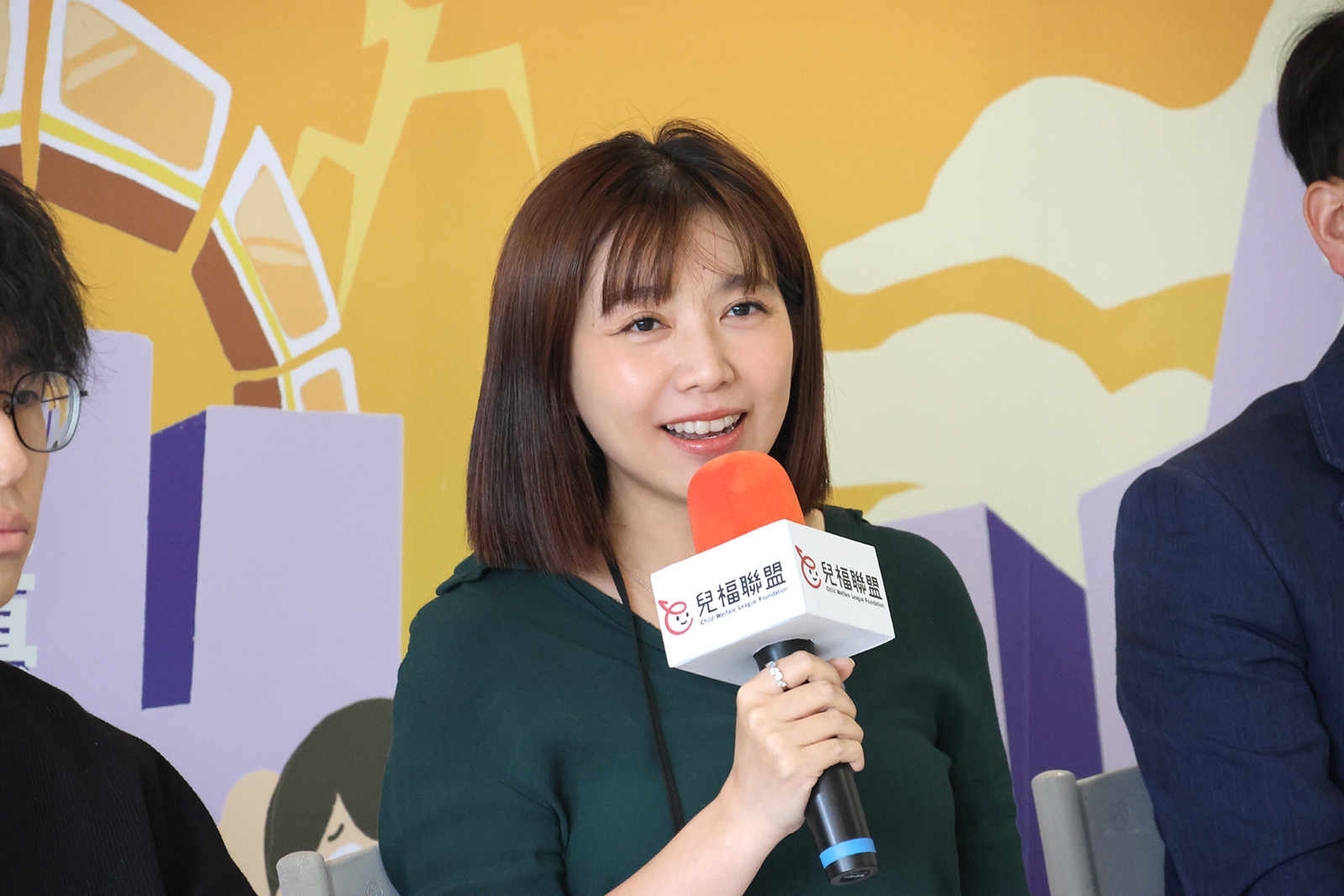
Legislator Ya-Lin Chang (張雅琳) shared that, as a mother of three, she deeply understands this sense of collective anxiety. Reflecting on her own six years in private school, she said the high-pressure environment "took away the joy of learning" and left her with little room to explore who she was. She believes that in order to support students living under intense pressure, the system must do more to protect children's right to rest and catch their breath, including by leaving more open, unstructured time after school. She emphasized, "a child's well-being matters more than keeping up with the pace."
High Teacher Turnover Is Affecting More Than 40% of Junior High Students' Learning, While Nearly One in Four Students Facing Emotional Distress Seek No Help at All
When junior high school students struggle under academic pressure, the education system, which should serve as a safety net, is often unable to support them. One major issue is the instability of the teaching workforce. CWLF's survey found that 36.6% of junior high school students had experienced teacher turnover during the most recent semester, and 41.5% of those students said their learning had been affected. Further analysis showed that teacher turnover was more serious in public schools, where the rate was 38.0%, compared with 23.3% in private schools. Frequent changes in teaching staff undoubtedly add to students' burden of adjustment.
Beyond the instability of teacher staffing, clear gaps also remain in the psychological support available to students. According to CWLF's survey, only 38.6% of junior high school students in Taiwan felt they received a high level of support from teachers, lower than the international average of 44.5%. The data also suggests that support is still disproportionately directed toward higher-achieving students. Only 34.3% of lower-performing students reported receiving a high level of teacher support, 8.2 percentage points lower than top-performing students. This shows that students are still being treated differently based on their academic performance.
Even more concerning, CWLF's survey found that 28% junior high school students had experienced thoughts of self-harm or suicide because of overwhelming academic pressure. Yet 24.6% chose to remain completely silent when they felt upset or faced difficulties, rather than talking to anyone. Among those who were willing to seek help [4], 15.2% turned to generative AI and 10% to online friends, both higher than the 9.8% who sought help from school teachers and the 6% who turned to school counselors. This suggests that some children are shifting their trust away from real-life relationships and toward the virtual world. In response, Legislators Chang and Lo both stressed the importance of fully implementing the recently amended Student Guidance and Counseling Act.
Addressing the growing tendency for students to turn to AI for help, Professor Chen said that talking to AI is not a long-term solution and that professional counseling resources in the real world must remain at the center of support. He suggested bringing more qualified counseling psychologists into schools to strengthen students' sense of psychological safety.
[4] Among students who were willing to seek help, the main sources of support in real life were classmates and friends (53.3%), parents (35.8%), and siblings or relatives (11.5%).
CWLF Urges the Government to Lower the Eligibility Age for Mental Health Support, and Calls on Parents and Schools to Reflect on Grade-Driven Ways of Interacting with Children
In response to the survey findings above, CWLF has put forward three key recommendations in the hope of building a more resilient mental health support system for children and adolescents:
- Parents should have thorough discussions with their children and make school choice decisions together based on each child's needs and strengths.
Given the clear differences between public and private junior high schools in both learning environments and daily routines, parents should engage in meaningful conversations with their children rather than making decisions on their behalf. According to CWLF's survey trends, private junior high schools generally involve longer commutes, later dismissal times, and more frequent exams. These factors directly reduce students' time for rest and increase the pressure they face in daily life. When choosing a school, parents should give priority to their child's physical and emotional capacity, their ability to adapt to a competitive environment, and whether a high-pressure setting may undermine their confidence. Decisions should be made based on both family resources and the child's individual characteristics, so that the learning environment becomes a source of growth rather than a heavy burden. - Schools and families should strengthen their support systems and avoid grade-driven, conditional forms of love.
Research shows that students with weaker academic performance often carry greater pressure and experience more physical and emotional distress in the learning process. Yet in Taiwan, teacher support for these students is significantly lower than it is for high-achieving students, and the overall level of support also falls below the international average. CWLF believes that schools should strengthen love and support for all students, especially by providing more practical help to children who are struggling academically, rather than using grades as the basis for how resources are distributed. Parents, too, need to become more aware of their own patterns of interaction and reflect on whether they may be unintentionally tying love and concern to academic performance. Children need to understand that love should not be defined by grades. Only then can pressure and isolation be reduced at the source. - The government should lower the eligibility age for the "Young Adults Mental Health Support Program" to 12.
According to statistics from the Ministry of Health and Welfare [5], the proportion of suicide reports involving children under 14 has risen sharply over the past decade, climbing from 1.3% in 2015 to 7.9% in 2024, an increase of more than sixfold. The current survey also found that learning fatigue among junior high school students continues to worsen. Yet when facing emotional distress, most students tend to internalize their feelings or confide only in peers or parents, and rarely take the initiative to seek professional medical or psychological counseling support. CWLF believes that lowering the program's age threshold to 12 would not only acknowledge the urgency of junior high school students' mental health needs, but also meaningfully reduce the financial barriers to counseling and improve the program's usage and reach. This would allow earlier intervention and help prevent emotional problems from worsening over time.
◼ ︎Read more:
CWLF Survey: Teens Turn to AI First as Stigma Silences Emotional Help-Seeking
2025 World Children's Day: What CWLF Child Wellbeing Survey Reveals about Children's Lives in Taiwan
The 2025 Let's Talk Camp Children Empowerment Showcase