


• About us
  • Advocacy
  • Services
  • News
  • Contact us

兒福聯盟

Donate

兒福聯盟 兒福聯盟

  • About us
  • Advocacy
  • Services
  • News
  • Contact us
Donate
Home  News  News content

The 2025 Let's Talk Camp Children Empowerment Showcase

2025-11-26
share to
As the heated discussion around Taiwan’s recent policy, the “NT$10,000 Handouts,” unfolded in the room, most of the children shared that they are not able to make decisions on their own about how the handouts should be used. One child noted that since the funds are distributed to every citizen, children—as citizens of Taiwan—should have the right to decide how to use their portion independently. Another child held a different view, arguing that because the handout comes from tax overpayments, parents should decide how the funds are used, as children are not yet taxpayers. Although differing perspectives were exchanged with great enthusiasm, the willingness to listen and show mutual respect created the kind of discussion atmosphere that the Let’s Talk camp strives to cultivate between children and adults.

What is CWLF’s Let’s Talk Camp?

The Let’s Talk camp is one of our Child Empowerment Programs, designed to encourage children to express their feelings and observations about everyday life through words and illustrations. We hope adults can explore children’s views through fresh and diverse lenses. Each year, we run the Let’s Talk program in a camp-like format, enrolling more than ten students from junior and senior high schools. Activities include writing, editing, data collection, issue-based discussions, and publication editing.

What is the Theme of Let’s Talk in 2025?
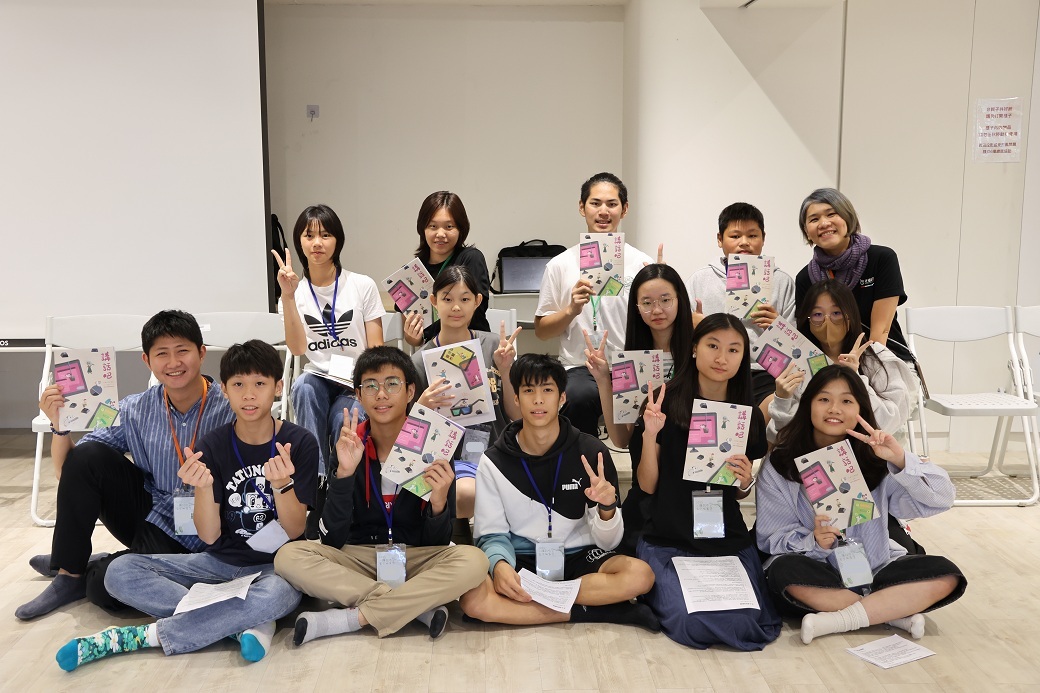
Over the course of four months, a total of 16 children from different parts of Taiwan collaborated to discuss and co-edit the Let’s Talk publication. Together, they developed the theme “Us in the AI Era.” In early November, the children and their teachers held a showcase event at CWLF. During the event, the children presented their work and shared the inspirations and ideas behind it. Their pieces focused on their own—and their families’ and friends’—experiences with integrating AI into daily life. They also explored what AI means to them personally and how they relate to it. Through reflecting on AI, many children were able to extend their insights toward their relationships with family and friends as well. The showcase also created a meaningful space for children and adults to exchange ideas. By collecting questions from both groups in advance, the event provided an opportunity for open discussion on the topics they were curious about from each other’s perspectives.

How Did Children Express Their Ideas Through Let’s Talk? What are Their Works About?

Whether it is an article, a poem, or an artwork, the strength of these pieces comes from the children’s lived experiences. These moments of reflection—captured in their words and images—are exactly the kind of thought-provoking conversations that the Let’s Talk camp aims to inspire.  By observing the world around them, retelling others' stories in their own voices, and expressing their emotions, feelings, and future plans through metaphors or symbolic imagery, the children add depth to their work. These creative expressions help readers and viewers better understand their struggles, uncertainties, and hopes as they navigate the growing presence of AI in their lives.

Many adults shared that one of the most memorable moments was discovering how deeply these children observe and reflect on the adoption of AI and the internet in their daily lives. Rather than viewing technology through a simple binary of “good” or “bad,” they were able to articulate both the benefits and the drawbacks they have personally experienced. Many of their works are inspired by the interpersonal or parent-child relationship dynamics caused by the use of smartphones or AI. They also shared with us the ambivalent feelings they hold for such situation. Examples such as one of the children said that even though she wanted to use the smartphones, but she also understood disciplined smartphone usage is also important to her development as well, another child stated that his parents do not allow him to use smartphones during mealtime. When he saw for himself when dining out with his family that children sat next table was staring at the smartphone for the whole entire mealtime without interacting with their family, he then realized his parents set the rules truly for his own good and felt sorry for the children next table. Although AI helped him to become less lonely, when having real friends, he felt the true happiness of not being lonely.... These are all the true feelings that children expressed through words or pictures.
How Does CWLF Execute Its Child Empowerment Program Through the Let’s Talk Camp?

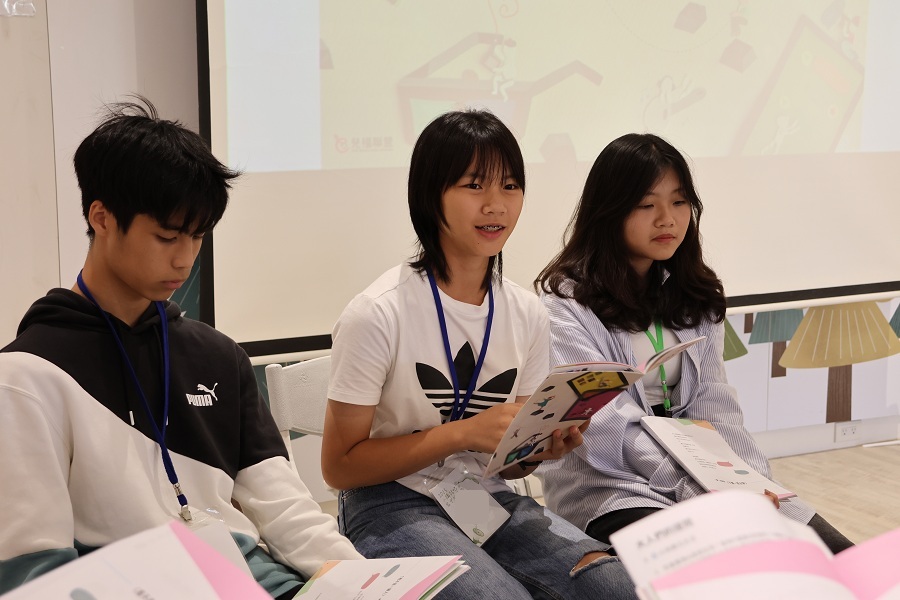
The aim of the camp is to encourage children to carry the thoughts and reflections developed through these discussions into their futures and dreams, and ultimately to empower them to make a positive impact on society. One of the crucial elements in the Child Empowerment Program is to lead aptly and cultivate children’s ability to express. For example, on the day of the showcase, the atmosphere and design of the whole process strive to be a child-friendly and interaction-provoke environment. Additionally, during the registration process, adults were required to read a mutual agreement with the children, rules included it is not allowed to drag old arguments to this activity, speak before listening and disturb when others’ speaking is not allowed...etc. All these rules reflect what children face in their daily lives. Because of experiences in their lives, they are keen to set up rules that can help them to communicate with adults in a friendly environment.

What are Some of the Key Themes in the Showcase?

1.Group Discussion: Children’s Inquiries for Adults

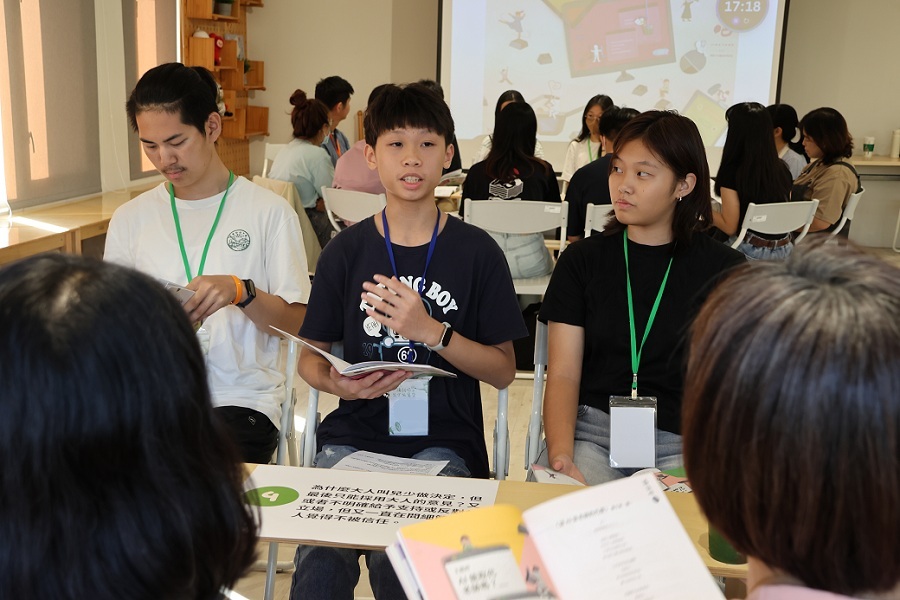
At the beginning of the event, children were organized into four groups. Each child had the opportunity to present their work and respond to questions posed by the adults in attendance. Following these exchanges, the children eagerly asked a pre-prepared question they prepared. One stated, for example: "why is it that when children share difficulties or emotions with adults, the conversation often ends in criticism or is misinterpreted as making excuses?" In a heartfelt dialogue, the adults shared their own experiences from childhood, reflecting on their interactions with family members and parents. They opened up about their struggles with similar issues, emphasizing that, as adults, they continue to navigate these challenges and are actively learning how to foster more supportive and understanding relationships with their own parents.

2.Taiwan's Recent Policy Initiative: the NT$10,000 Handouts
Recently, Taiwan introduced an intriguing policy aimed at distributing NT$10,000 to all citizens, stemming from tax overpayments. In this context, children at the scene were asked about whether they have the autonomy to freely utilize the fund. Interestingly, the majority reported that they did not have such autonomy, and only a few had discussed potential uses with their parents. One child passionately stated that, as citizens, they should have the autonomy to decide how to manage the money allocated to them by the government. In contrast, another child offered a counterpoint, asserting that since the NT$10,000 derives from overpaid taxes and they have yet to enter the realm of taxation themselves, it would be more appropriate for their parents—who earn an income—to determine how the funds should be utilized. Despite the differing opinions and rationales, the discussion provided a valuable opportunity for everyone to listen to and respect each other's viewpoints. This exchange highlighted the spirit of fostering open and friendly dialogue that the Speak Up Camp strives to cultivate. It's a delightful reminder of the importance of nurturing a space where diverse perspectives can flourish.

3.Final Q&A Session: Children Answered Adults' Questions
Questions collected in advance from adults were categorized into four main themes:

  • AI and Life in the Digital World
  • Learning and Personal Growth
  • Interpersonal and Parent-Child Relationships
  • Personal Values and Generational Differences
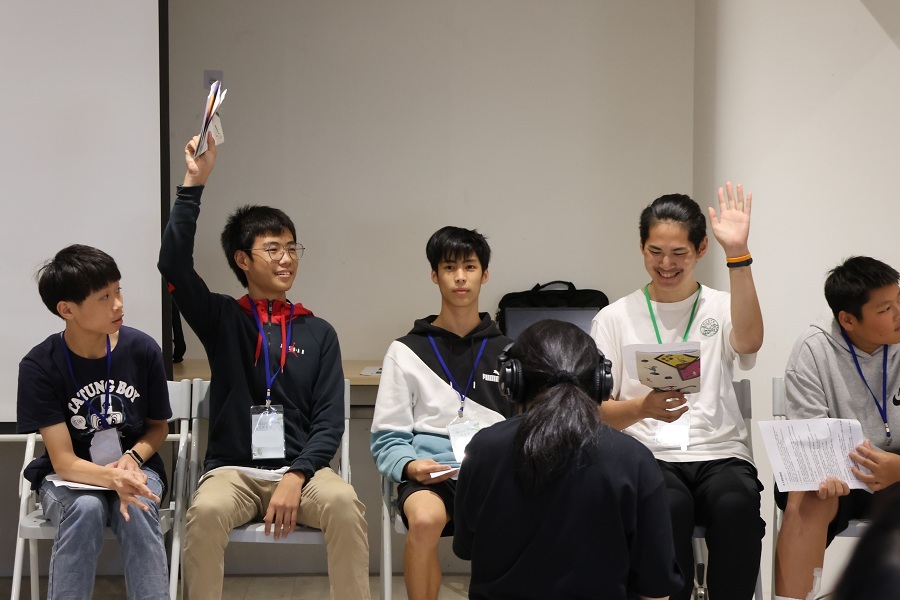
A question comes up: “What do you think about 'teenage rebellion'? Is it an uncontrollable stage, or is there something deeper behind it?” L, a second-year junior high school student, believes that teenage rebellion is naturally hard to control. He feels that young people are still developing, constantly adjusting how they understand and respond to the world around them. His cram-school teacher, however, insists otherwise: “Teenage years aren’t an excuse. Your emotions are entirely within your control. How you choose to communicate with your parents is up to you.” Even so, L maintains that the more adults try to suppress children’s emotions, the stronger their rebellious reactions will become.
Another interesting question to explore is: “Are online friendships more appealing than traditional, in-person ones?” This topic resonated with Takun, also a second-year junior high student, who shared some thoughtful insights on how digital relationships can sometimes fall short. For example, when chatting online, the lack of vocal tone can easily lead to unintended misunderstandings. Takun gave a relatable example: if someone says, “I had a great day today,” and the reply is simply, “Oh,” it might be read as annoyance, when in reality the person may just be curious about what happened. Takun expressed that he genuinely prefers face-to-face conversations or voice chats, where tone and emotion can be conveyed more clearly. For him, these forms of interaction reduce misunderstandings and make it easier to build genuine connections with friends.
When thinking about the question “What kind of parents do children and adolescents consider ideal?” Tim, a second-year junior high student, shared his thoughts with everyone at the scene. He began by describing the type of parenting he finds challenging. He gave the example that after a long, exhausting exam day, he often comes home to the immediate questions: “What score did you get? Did you do well?” If he did poorly, he wouldn't know how to answer. Tim said he wishes his parents could give him some time to unwind—maybe by playing a bit of video games—so he’d be in a better mood to talk about his day. In his view of “ideal parents,” the relationship is built on mutual respect. He hopes for parents who don’t demand obedience simply because they’re elders or assume they are always right, but instead communicate with him as equals. Ultimately, Tim longs for a supportive environment where he and his parents can understand and respect each other’s perspectives, creating a happier and healthier family dynamic.

CWLF’s Let Talk camp aims to continuing in creating the chance for children and adults to form discussions

Many adults noted that they were impressed by the clarity and confidence with which children and adolescents expressed themselves. For instance, children could articulate their viewpoints, showcasing a wonderfully diverse range of opinions that were not only creative but also deeply insightful in confidence and clarity. This experience sparked a realization among adults about the importance of providing more opportunities and resources for children and learning to listen to them closely. Such engagement is vital for fostering meaningful dialogue. In his behind-the-scenes reflections, Mr. Yan-Lu, the teacher at the camp, highlighted a thought-provoking line from *The Truman Show*: “There is no more truth out there than there is in the world I created for you. The same lies, the same deceit. But in my world, you have nothing to fear.” He pondered whether our interaction with AI might lead us into a simile, like us being placed in a personal virtual studio, in which do we believe that AI and algorithms understand us better than we do ourselves?  This reflection underscores a fundamental truth: whether through technology or human connection, what we ultimately seek is genuine understanding —sustained dialogue, active listening, and deep empathy. The Let's Talk camp is dedicated to encouraging and uplifting children to voice their thoughts and feelings. Moreover, we seek to establish a welcoming space where adults and young people can engage in enriching, meaningful conversations with one another.


To see more works, please click here
:
https://letstalk2025.my.canva.site/


◼︎ More CWLF articles:
• Youth Mental Health in the Digital Age: Highlights from CWLF's 2025 International Conference
• 2025 World Children's Day: What CWLF Child Wellbeing Survey Reveals about Children's Lives in Taiwan
• CWLF Survey: 63% of Teens Use AI for Schoolwork, but 60% Rarely Verify Accuracy or Safeguard Privacy
Back to list
Contact
TEL: 02-2799-0333
FAX: 02-8797-3131
ADD: 7F., No. 21, Ln. 583, Ruiguang Rd., Neihu Dist., Taipei City 114694, Taiwan (R.O.C.)
Copyright © 2024 財團法人中華民國兒童福利聯盟基金會
Powered by A-Cart web design