



CWLF Survey: Social Media Use Fuels Rising Cyberbullying After School Hours
"School's out, yet the class group chat has already exploded with 200 new messages."
"It's 11 p.m., and my phone buzzes again—who's being called out this time? "
For many teenagers, these scenes are not exaggerations but part of everyday life. According to a recent survey by the Child Welfare League Foundation (CWLF)[1], 84.6% of junior high and high school students use social media every day, and more than 20% are online almost constantly. As social media becomes a primary social space, young people's emotions and relationships are increasingly played out on screens—bringing with them new pressures and misunderstandings. Bullying, once mostly confined to school grounds, has now moved online.
To better understand the current state of cyberbullying among students, CWLF surveyed 21,539 teens across Taiwan through an online questionnaire and released the 2025 Survey on Teen Social Media Use and Cyberbullying Behaviors[2]. The results indicate that Instagram and TikTok are the most frequently used platforms, while LINE remains the primary messaging app[3].
As interactions shift online, nearly half of teens create "secondary accounts" to hide their true selves—reflecting their desire to be understood while fearing emotional harm. Meanwhile, 40.7% of students have heard of classmates being publicly shamed, excluded, or having private messages shared and mocked in group chats. 18.6% have personally experienced such harm, showing that bullying now extends beyond campus and continues around the clock.
Girls consistently report higher rates of every type of cyberbullying and show deeper emotional impact. At the same time, nearly 40% of bystanders choose to remain silent, allowing isolation and indifference to become a second layer of harm.
CWLF urges the public not to overlook the wounds caused by cyberbullying. Parents and educators are encouraged to take the initiative to check in with young people about their online interactions and help them build emotional regulation and communication skills. CWLF also reminds parents that they can use the "5 Steps for Supportive Parenting" to navigate online conflicts with their children.
When young people feel safe to speak up and feel understood, the online world can become a space for connection—not a source of harm..
[2] CWLF conducted the online survey from September 11 to 30, 2025, collecting 21,539 valid responses from junior high and high school students across Taiwan. Among the respondents, 48.9% were boys and 78.7% were junior high students. Students from the six major municipalities accounted for 52.1% of the sample, with the largest shares from Taichung City (12.2%), New Taipei City (11.1%), and Kaohsiung City (10.0%).
[3] The most frequently used social media platforms were Instagram (74.6%) and TikTok (57.4%). Threads also showed high usage, especially among girls, with more than half (53.8%) reporting experience using the platform. For messaging apps, LINE (64.3%) and Messenger (50.1%) were the primary tools used by students.
Pervasive Digital Pressures: Nearly Half of Teens Use "Secondary accounts" to Be Themselves
According to the 2021/2022 Health Behaviors in School-aged Children (HBSC) international survey, nearly 40% of adolescents reported staying connected with friends and online acquaintances almost around the clock[1]. Such constant connection also brings added stress, including information overload, fear of missing out (FoMO), and anxiety or guilt about keeping up with messages and interactions[2].
CWLF's survey similarly found that around one-third of junior high and high school students in Taiwan had been misunderstood or scolded by friends for not replying quickly enough (31.4%) or for responding too briefly (29.3%). In such an environment, teens may feel compelled to hide parts of themselves—46.3% said they had created a "secondary accounts" on the same platform, yet only 33.3% felt their online self was completely the same as their offline self.
This reflects a deeper pattern: young people long to be understood in digital spaces, yet they also fear being hurt—conditions that can quietly set the stage for cyberbullying.
[1] Health Behavior in School-aged Children study (2023), Data browser (findings from the 2021/22 international HBSC survey): https://data-browser.hbsc.org
[2] Steele, R. G., Hall, J. A., & Christofferson, J. L. (2020). Conceptualizing digital stress in adolescents and young adults: Toward the development of an empirically based model. Clinical Child and Family Psychology Review, 23(1), 15-26.
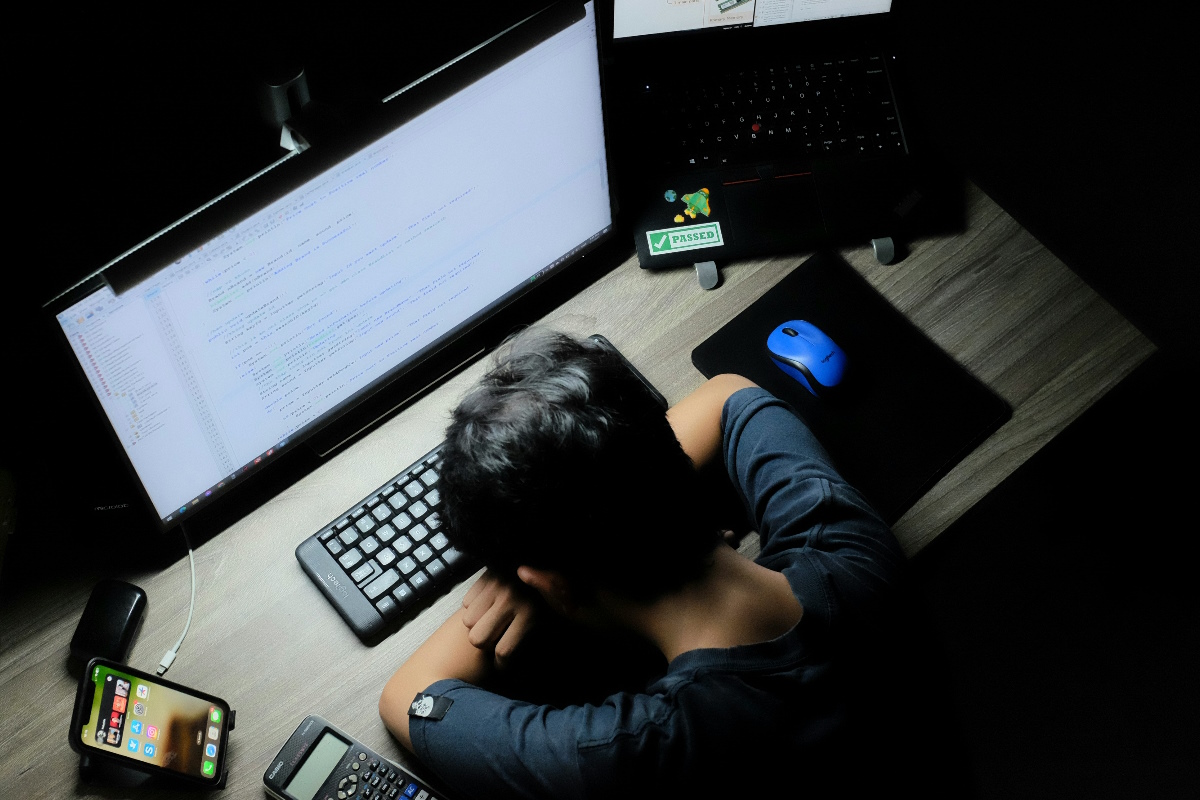
Bullying Moves Onto Screens as Nearly One in Five Students Face Cyberbullying by Schoolmates
As children and teens spend increasing amounts of time online, behaviors such as teasing, exclusion, and bullying—once limited to school hours—have expanded into social media and messaging platforms. These online settings remove time and space boundaries, creating broader and more persistent harm for those targeted.
To understand cyberbullying within school communities, the survey presented nine common forms and asked students whether they had heard of such incidents happening to their schoolmates. The most frequently reported situations were public shaming or mocking classmates in class group chats (35.7%), excluding peers from group chats (25.6%), and uploading private conversations to ridicule others (23.4%).
When asked about their own experiences, 18.6% of students reported being personally affected by cyberbullying, and 7.5% had experienced three or more types of attacks[1]. Even more concerning is the silence that often occurs among bystanders: 39.4% of students chose to do nothing when witnessing a classmate being bullied. Only a small portion offered comfort, practical advice, or sought help from a trusted adult.
[1] Types of school-based cyberbullying include: public shaming, exclusion, or mocking in group chats; being denied access to group chats; having private messages captured and posted online; being mocked for appearance or personal matters; the spread of personal information or rumors; uploading photos or videos to create memes; posting hurtful comments; and discriminatory remarks targeting gender or sexual orientation.
Lasting Impact of Cyberbullying: Nearly Half Fear Social Interaction, and 15% Have Considered Self-Harm
Cyberbullying is not just a momentary conflict—it can leave deep and lasting emotional wounds. Among students who had experienced cyberbullying, nearly half (48.9%) reported social anxiety or difficulty engaging with others. Another 45.4% experienced physical symptoms related to emotional stress, including insomnia, headaches, or stomach discomfort.
Additionally, 42.2% said the experience made them feel worthless or lowered their self-esteem, and 15.1% had at some point considered self-harm or suicide. When peer conflict moves online, it is no longer limited by time or place; hurtful comments and humiliating content can be recorded, shared, and repeatedly viewed—leaving young people feeling as if they "cannot escape," even when offline.
Worryingly, despite being hurt, 17.1% of affected students chose not to tell anyone. Only 42.4% were willing to confide in their parents. Most students preferred turning to friends (62.2%), and more reported seeking support from AI tools (16.6%) than from teachers (15.6%) or school counselors (9.4%). This highlights the ongoing need to strengthen parent–child communication and build trust between students and school staff.

Girls and Instagram/Threads Users Face Higher Cyberbullying Risks and Deeper Emotional Impact
Further analysis shows that girls experience higher rates of nearly all forms of cyberbullying compared with boys. Among students who had been bullied, nearly 58.2% of girls reported social anxiety or difficulty interacting with others—about 20 percentage points higher than boys. Additionally, 19.1% of girls had considered self-harm or suicide, more than twice the rate of boys (9.4%). On average, girls reported 3.1 physical or emotional symptoms, while boys reported 2. Overall, cyberbullying appears to cause deeper and longer-lasting psychological harm for girls.
Social media platforms also differ in how they shape teens' vulnerability to online harm. The survey found that students who used TikTok or Threads experienced more types of cyberbullying than those who did not use these platforms. The differences were even clearer when looking at physical and emotional symptoms: Instagram users reported 1.1 more symptoms on average than non-users, while Threads users reported 0.8 more symptoms[1]. These findings suggest that certain platform environments may intensify emotional stress and psychological burden for young people.
[1] Among students who experienced cyberbullying and reported physical or emotional symptoms, Instagram users reported an average of 2.9 symptoms compared with 1.8 among non-users; Threads users reported an average of 3.1 symptoms, compared with 2.3 among non-users.
Preventing Cyberbullying: Parental Care Matters More Than Control
When worried about online risks, many parents choose to limit their children’s screen time. Although 43.3% of parents reported setting time restrictions, the survey found that such rules did not significantly reduce the likelihood of a child experiencing cyberbullying.
What truly offers protection is care, not control. The survey showed that when parents demonstrated high levels of care about their children's online activities[1], the rate of cyberbullying was lower (16.1%) compared with families with low parental care (21.7%). More than half (55.2%) of teens in high-care families were willing to talk to their parents when something upsetting happened—far higher than the 27.3% in low-care families.
Furthermore, children with caring parents are less likely to experience lowered self-esteem, social anxiety, or thoughts of self-harm or suicide following episodes of bullying. These findings underscore that parental understanding and presence are among the strongest safeguards against online harm.
[1] The questionnaire included two items:
(1) whether parents understood the child's situation on social media/messaging platforms, and
(2) the extent of parental concern about the child's internet use.
Each item was measured on a four-point scale, with median scores (5 points total) used to categorize high vs. low parental care for analysis.

CWLF’s Call to Action: Supporting Children Through Cyberbullying Starts With Listening
In a generation where social media has become central to everyday life, asking children to avoid it entirely is unrealistic. While some countries have begun proposing restrictions for users under 16, Taiwan has yet to adopt clear regulations. Before such policies are in place, CWLF urges families and schools to take the following actions to protect young people from cyberbullying:
- Seek help when it happens; offer help when you see it.
Young people should not endure cyberbullying in silence, nor should bystanders remain passive. When facing harassment, mockery, or the spread of false information, students should reach out to a trusted adult—such as a parent or teacher—and save evidence before seeking support. When witnessing a classmate being bullied, students are encouraged to check in, offer support, and report the situation if necessary.
CWLF provides an anti-bullying consultation hotline (+886-4-2202-5399 ext. 4) and a Line official account (@antibullying) to ensure that no child has to face online harm alone. - Parents and teachers can help children build emotional regulation and social skills.
The survey found that children with stronger emotional regulation skills and better social support networks were less likely to experience cyberbullying—and when they did, the negative emotional and physical impact was less severe. Parents and teachers can strengthen these abilities through open conversations, modeling healthy behavior, and incorporating supportive practices into daily routines or classroom learning. - CWLF's "Five Steps for Supportive Parenting."
CWLF encourages parents to use their eyes, ears, heart, mind, and voice to observe, listen, and engage in meaningful conversations with their children. The Five Steps for Supportive Parenting include:
(1). Lead with empathy; discuss solutions later — Help your child feel supported and understood.
(2). Find outlets for emotional relief — Support your child in releasing stress and regaining calm.
(3). Accept that not everyone will get along — Not everyone has to like each other, but no one has the right to cause harm.
(4). Reduce time spent on social media — Gradually lowering usage can ease anxiety and pressure.
(5). Seek professional support when needed — Keep evidence and consider legal action if necessary.
◼︎ More CWLF surveys:
• CWLF Survey: Teens Turn to AI First as Stigma Silences Emotional Help-Seeking
• 2025 World Children's Day: What CWLF Child Wellbeing Survey Reveals about Children's Lives in Taiwan
• CWLF Survey: 63% of Teens Use AI for Schoolwork, but 60% Rarely Verify Accuracy or Safeguard Privacy