


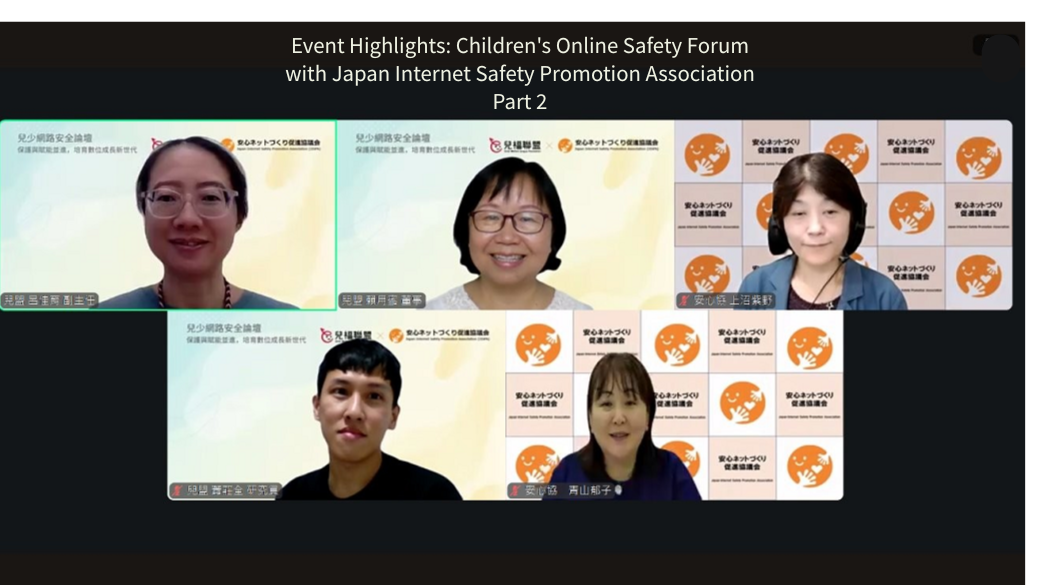
Event Highlights: Children's Online Safety Forum with Japan Internet Safety Promotion Association 2
I. CWLF Presentation Highlights: CWLF’s Children’s Digital Literacy Empowerment Programs and Legislative Advocacy Experience
II. JISPA Presentation Highlights from Director Shino Uenuma: An analysis of the evolving online safety challenges facing children in Japan, as well as an introduction to JISPA’s programs and approaches
V. Conclusion and Online Safety Resources
VI. Resources
III. JISPA Presentation Highlights from Special Member Ikuko Aoyama: Insights into the challenges children face in today’s digital environment, with a focus on mental health and the role of social and emotional learning (SEL)
(I) Why Are Digital Environment Challenges for Children so Difficult to Address Today?
Ikuko Aoyama, Special Member of JISPA, began by outlining the current situation of bullying in Japan. Each year, Japan’s Ministry of Education, Culture, Sports, Science and Technology (MEXT)(文部科学省) conducts a nationwide survey on officially recognized bullying cases involving students in elementary schools, junior high schools, high schools, and special education schools. According to data covering April 2023 to March 2024, a total of 732,568 bullying cases were reported, representing an increase of 50,620 cases, or approximately 7.4%, compared with the previous year. The survey also found 24,678 cases of cyberbullying involving the use of electronic devices such as computers or smartphones, an increase of 758 cases from the previous year, and the highest figure recorded since the survey began. While cyberbullying accounts for only 0.03% of all reported bullying cases and remains a relatively small proportion overall, it is important to note that the survey respondents were school principals rather than students themselves. As a result, the data reflect only cases known to schools, suggesting that the actual number of cyberbullying incidents may be significantly higher than reported.
Approximately 10 to 15 years ago, in response to the growing difficulty of identifying and addressing cyberbullying, MEXT focused its efforts on strengthening digital education ethics in schools. This approach included widely used messages such as “be responsible for what you post” and “digital tattoos last a lifetime,” with the intention of improving students’ digital literacy and preventing them from becoming perpetrators. However, Aoyama raised a critical question: In today’s rapidly changing social and technological landscape, is this approach still effective?
Children now face online risks that extend far beyond cyberbullying. Challenges such as deep fake technologies, illegal part-time work, and online-related crimes represent forms of exploitation and fraud that are difficult for individuals to prevent on their own. Aoyama pointed out that adults often hold significant misconceptions about how young people use the internet. Many assume that children could avoid online risks simply by being more cautious or responsible. However, as the digital environment becomes increasingly complex, even adults find it difficult to maintain a sense of control or agency over the situations they encounter. Aoyama highlighted two key reasons for this challenge:
A. Filter bubbles: Algorithm-driven content filtering means that much of the information people see online is pre-selected, making it easy to become trapped in like-minded spaces and difficult to grasp the full picture.
B. Echo chambers: Information circulates and reinforces itself within online networks, amplifying certain viewpoints while crowding out alternative perspectives, much like an echo that grows louder over time.
(II) Current Challenges Facing Children in Japan and Their Implications for Mental Health
Misunderstandings among adults about the challenges children face can contribute to a sense of powerlessness among young people. Experts note that prolonged feelings of helplessness, particularly when problems remain unresolved, can lead to serious mental health concerns. According to the World Health Organization (WHO), approximately 20% of school-aged children experience mental health issues.
Aoyama, highlighted several pressing challenges currently affecting children in Japan:
A. School refusal: Data from April 2023 to March 2024 show that the number of elementary and junior high school students refusing to attend school reached a record high of 346,000, accounting for 3.7% of all school-aged students nationwide. On average, this result means that one student per class is affected by school refusal.
B. Suicide cases: A 2024 survey reported that the number of student suicides reached an all-time high, with 527 cases recorded. Notably, among G7 countries, Japan is the only one where suicide is the leading cause of death among adolescents.
These trends underscore the growing urgency of addressing mental health issues among children. In fact, mental health is closely linked to a wide range of outcomes, including academic performance, high school graduation rates, civic participation, life expectancy, employment rates, addictive behaviors, suicide, and crime rates (Bains & Diallo, 2016; Cane & Oland, 2015) [1] [2]. As Aoyama emphasized, this is not solely an issue regarding the education aspect, but a challenge that requires collective action across society as a whole.
[1] Bains, R. M., & Diallo, A. F. (2016). Mental Health Services in School-Based Health Centers: Systematic Review. The Journal of school nursing : the official publication of the National Association of School Nurses, 32(1), 8–19. https://doi.org/10.1177/1059840515590607
[2] Cane, F. E., & Oland, L. (2015). Evaluating the outcomes and implementation of a TaMHS (Targeting Mental Health in Schools) project in four West Midlands (UK) schools using activity theory. Educational Psychology in Practice, 31(1), 1–20. https://doi.org/10.1080/02667363.2014.975784
(III) What Are the Key Approaches to Addressing Digital Environment Challenges for Children and Youth?
(A) Agency refers to the ability to make autonomous decisions, including the capacity to think independently, make choices, and take action. Digital agency extends this concept to the digital environment, describing an individual’s ability to regulate their behavior, adjust their actions, and respond flexibly to different online situations.
(B) Digital agency is commonly understood as comprising three core elements: Digital Competence, Digital Confidence, and Digital Accountability. Research on how education and training can effectively strengthen these capacities is still ongoing.
(C) From a psychological perspective, individuals who consistently experience a sense of agency are more likely to feel that their actions can influence outcomes and shape the course of events. This sustained sense of agency is associated with greater well-being and a stronger sense of autonomy in life (Weinstein & James, 2022).
B. Fostering Digital Empathy
(A) Digital empathy refers to the ability to remain self-aware during online interactions, understand the feelings and perspectives of others, and participate in digital communities in a responsible and respectful manner.
(B) As immersive technologies and metaverse environments increasingly become part of young people’s everyday lives, concerns have emerged that opportunities for empathy may diminish, further underscoring the importance of cultivating digital empathy.
(C) While empirical research on how to train digital empathy remains limited, educational practices in Europe and North America have often drawn on social and emotional learning (SEL) frameworks to support the development of empathy-related skills.
C. Implementing Social and Emotional Learning (SEL)
(A) SEL is an educational approach that emphasizes children’s emotional and interpersonal development. Through learning to recognize and regulate their emotions, children are better equipped to build healthy relationships and develop the ability to make responsible decisions.
(B) SEL is commonly framed around five core competencies: Self-awareness, Social awareness, Self-management, Relationship Skills, and Responsible Decision-Making (CASEL, 2013).
(IV) Why Has SEL Gained Increased Attention in Japan?
After a ten-year interval, Japan revised the Course of Study Guidelines in 2022, formally incorporating SEL into curricula related to supporting students’ social development. As a result, SEL-related content is expected to become increasingly present in educational settings across Japan. This raises an important question: Why has SEL attracted such growing attention?
A. SEL can help prevent and address behavioral challenges: How children communicate, play, and experience daily life today differ significantly from those of previous generations. In the past, children naturally developed social adaptation and interpersonal skills through everyday interactions. However, the rapid advancement of technology has reduced these opportunities, making it more difficult for such skills to develop organically. SEL helps fill this gap by intentionally supporting children’s social and emotional growth.
B. The high quality and scale of returns on investment in SEL: Research indicates that SEL enhances children’s self-confidence and overall well-being. Some studies have further shown that every USD 1 invested in SEL can generate up to USD 11 in educational and social benefits, demonstrating a strong return on investment.
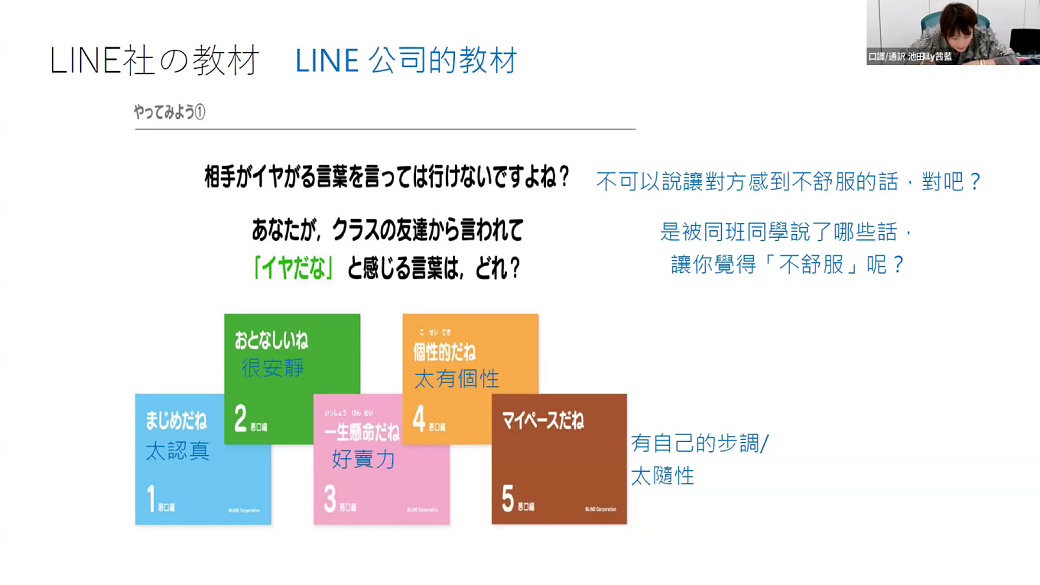
(V) SEL Programs and Educational Practices in Japan
B. Free comic-based learning materials

IV. Q&A Highlights: children’s participation in public affairs, supportive digital guidance, and positive internet use
(I) The Importance of Children’s Participation in Improving the Digital Environment
Drawing more than a decade of experience hosting the High School ICT Conference, Uenuma emphasized that the internet is, in many ways, the “native language” of high school students. Young people often have access to information and digital experiences that are more current than those of adults, making it especially meaningful to invite them to propose solutions from their own perspectives. She also shared that many students who previously participated in the conference have gone on, as adults, to serve as official members or advisory committee members of Japan’s national child-focused authority, the Children and Families Agency(こども家庭庁), where they continue to contribute their expertise and influence. Encouraging children to share their ideas and recommendations not only helps capture the authentic experiences of young digital users but also empowers them to remain engaged in creating positive change within society.
(II) Discussing Internet Use Guidelines with Children Through Supportive Guidance
In light of recent discussions around Australia’s legislation to restrict social media use for children under the age of 16, many participants were curious whether similar laws exist in Japan. Uenuma explained that prior to the establishment of JISPA in 2009, some local governments in Japan had attempted to introduce strict regulations prohibiting children from owning mobile phones. However, these efforts were ultimately not implemented.
At present, Japan’s legal framework places greater emphasis on protecting young people from harmful online content, such as using filtering systems, rather than imposing blanket restrictions on internet or social media use. For example, Japanese schools generally avoid enforcing rigid rules on screen time through school regulations. Instead, they encourage children and parents to jointly discuss and agree on appropriate ways to use digital devices. This approach reflects Japan’s broader preference for supportive guidance over strict, top-down regulation when it comes to children’s digital engagement.
Building on this perspective, Aoyama further shared key principles for a supportive guidance that could balance between providing guidance and respecting children’s autonomy:
- Encouraging intrinsic motivation instead of lecturing: Restrictions imposed solely by adults tend to have limited effectiveness. Greater emphasis should be placed on nurturing children’s intrinsic motivation to learn and engage positively on their own.
- Adults must also continue learning: Adults are encouraged to move beyond the assumption that they know more than children, and instead approach digital issues with curiosity, seek to understand children’s needs, and update their own digital knowledge alongside them.
- Gradual and developmentallyappropriate guidance: Binary approaches such as sudden bans or unrestricted access are discouraged, as they deprive children of opportunities to learn how to manage risks. Instead, guidance should be tailored to children’s developmental stages. For example, an app that encourages interaction between parents and young children can help foster positive digital communication habits from an early age.
(III) When Internet Use Leads to High Levels of Conflict Between Parents and Children Shifting the Focus Toward Positive Use
A. Redefining parental control
(A) Parental control should not be understood solely as a set of technical or device-based monitoring functions. Instead, it should be reframed as a supportive bridge for communication between parents and children.
B. Shifting the focus from screen time to positive use
(A) Japan also struggled with debates over screen time limits around 15 years ago, but the conversation has since shifted toward how the internet can be used in positive and constructive ways.
(B) When children use the internet for purposes such as learning, knowledge-building, or civic participation, longer usage time may actually contribute to psychological well-being and social development.
Across these approaches, JISPA consistently emphasizes the importance of strengthening parent–child interaction and communication, and of working together to develop household rules that suit each family’s unique circumstances. As Aoyama noted, meaningful dialogue between parents and children is ultimately the most critical factor. As an example, she shared that after the summer break, her daughter’s school assigned a reflective exercise in which parents and children completed a “summer internet use review” together. Through written reflection, families were encouraged to look back on children’s online habits during the long holiday, providing a constructive opportunity for shared discussion and understanding.
Through this exchange, CWLF was pleased to invite JISPA to share practical experiences in advancing online safety for children, while engaging in meaningful dialogue with partners in Taiwan on shared challenges and future directions. Both Director Uenuma and Special Member Aoyama repeatedly emphasized that positive communication and open dialogue are essential, helping parents and children build trust and navigate the digital world with greater confidence and ease.
Key Takeaways:
1. Preventive education and positive parent–child communication should be part of everyday life
Once incidents such as cyberbullying or online-related crime occur, the harm is often difficult to reverse. Online safety education should therefore be viewed as an everyday practice, much like preventing illness, rather than a one-time lesson. Whether through ongoing parent–child conversations at home or cross-disciplinary approaches in educational settings, integrating online safety awareness into daily life provides children with meaningful and lasting learning experiences.
2. The importance of Digital Agency, Digital Empathy, and SEL
Aoyama cited findings from The Fast Track Project (1990s) [3], a long-term longitudinal study, which highlights that academic achievement alone is not sufficient to help children lead fulfilling and productive lives. The report pointed out that strengthening children’s self-management, emotional regulation, and social awareness is both a powerful and cost-effective investment in their future well-being and development.
3. Ongoing dialogue and knowledge-sharing are key to identifying effective approaches
Questions such as how to effectively strengthen digital agency and empathy, and how to enhance children’s overall well-being, remain areas for further research. Continued exchange and shared learning across sectors and countries will be essential to advancing effective and sustainable solutions.
[3] The Conduct Problems Prevention Research Group (2002). The implementation of the Fast Track program: an example of a large-scale prevention science efficacy trial. Journal of abnormal child psychology, 30(1), 1–17.
- Instagram Staying Safety: Tips for Parents: https://www.facebook.com/help/instagram/154475974694511?locale=zh_TW
- Children’s platform 1420Hz (An online platform that supports young people aged 14 to 20 in expressing their views, exploring social issues, and taking part in civic dialogue.): https://www.1420hz.org.tw/
- Instagram and Facebook Page BIBIBOBO (A youth-oriented social media platform that promotes expression, dialogue, and engagement among young people.): https://www.instagram.com/bibibobo.tw/ & https://www.facebook.com/bibibobo.tw/
- "Hugs for SDGs” biweekly magazine: https://online.fliphtml5.com/czoiq/ojes/?1722063927#p=1
True prevention grows out of long-term support and sustained action. Through cross-sector collaboration, we believe we can help parents and children learn to understand one another, listen to each other, and support children in learning and growing safely and happily in the digital world.