

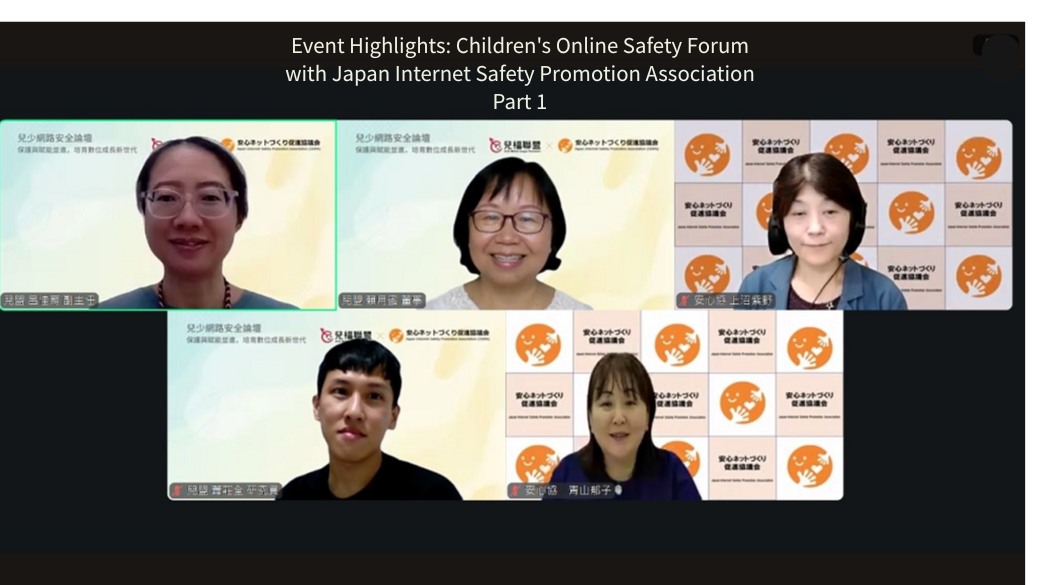
Event Highlights: Children's Online Safety Forum with Japan Internet Safety Promotion Association 1
The information and emerging technologies of the digital environment offer new opportunities for children’s learning and development, while also raising growing concerns. For parents, educators, and professionals working in child and youth services, a shared question remains: How can we guide children to explore the digital world safely and responsibly? In response, the Child Welfare League Foundation (CWLF) hosted the Children’s Online Safety Forum—Supporting the Digital Generation through Protection and Empowerment on November 10, 2025. The forum featured insights from Japan’s nonprofit organization, Japan Internet Safety Promotion Association (JISPA), with presentations by Director Shino Uenuma and Special Member Ikuko Aoyama, who shared Japan’s experience and recommendations in advancing online safety for children and youth. Established in February 2009, the association is a cross-sector nonprofit that brings together members and committee members from the telecommunications and internet industries, academia, and the education sector. Its mission is to promote the safe and informed use of information and communication technologies (ICT) for people of all ages.
Key Discussion Highlights (Click to jump to each section)
I. CWLF Presentation Highlights: CWLF’s Children’s Digital Literacy Empowerment Programs and Legislative Advocacy Experience
II. JISPA Presentation Highlights from Director Shino Uenuma: An analysis of the evolving online safety challenges facing children in Japan, as well as an introduction to JISPA’s programs and approaches
I. CWLF Presentation Highlights: CWLF’s Children’s Digital Literacy Empowerment Programs and Legislative Advocacy Experience
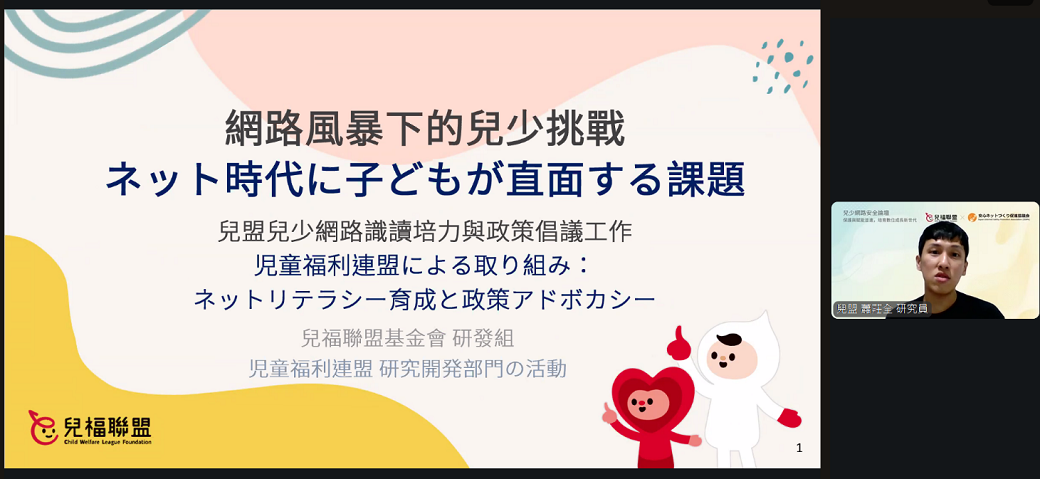
Chuang-Chuan Hsiao, a researcher with CWLF’s Research and Development Department, shared that CWLF’s attention to online safety issues began in 2000, when the organization identified its first case of a child running away from home due to online-related factors through the then Missing Children Information Center. According to a CWLF survey conducted that year, out of 19 voluntary runaway cases, six were linked to internet use. Since 2002, cases involving children leaving home due to friends they met online have continued to rise. In response to this concerning trend, CWLF launched systematic surveys on online safety in 2005. Today, CWLF’s work on online safety for children is carried out through three main pillars: systematic surveys, online safety–related services and tools, and policy advocacy.(I) Recent Online Safety Issues Affecting Children in Taiwan
Based on recent surveys and observations, CWLF has identified five key trends in how children a in Taiwan are using the internet:
A. Internet use beginning at younger ages: Children in Taiwan now own their own smartphones at an average age of 10, and many create secondary or private accounts, often within a year, without their parents’ knowledge. These accounts allow them to interact more freely with strangers online.
B. Growing concerns over the circulation of sexual images: Some strangers whom children meet online may make inappropriate requests, such as asking to meet in person alone or proposing romantic relationships. According to a 2024 survey by Taiwan’s Ministry of Health and Welfare, there were 3,104 reported cases involving the production and distribution of sexual images of children and adolescents. Of particular concern is that this number continues to rise each year.
C. Cyberbullying: An estimated 21.1% of children have experienced cyberbullying. Among those affected, the most prevalent forms include“being unjustly blamed or attacked by others” at 64.1%, “receiving hostile or aggressive messages or comments” at 50%, “having false accusations or reputation-damaging rumors spread about them” at 45.2%, and “being excluded from online groups or deliberately removed from group chats” at 36.7%.
D. Negative impacts of social media:
(B) Increased social comparison: 33.4% of children frequently compare themselves with others based on check in locations, numbers of likes, reactions, or comments, which can undermine self-esteem and well being.
(C) Social media overuse: About 24.6% of children report feeling unable to disengage from social media even when they want to stop. According to a 2024 survey, children spend an average of 35 hours per week on social media alone, not including time spent searching for information, watching videos, or using messaging applications.
(II) CWLF’s Online Safety Related Services
In response to these emerging challenges, CWLF has drawn on approaches adopted by international organizations such as Australia’s eSafety Commissioner and New Zealand’s Netsafe to integrate online safety more fully into its service delivery. Through diverse and interactive methods, CWLF aims to engage students in discussions about safe and responsible internet use. CWLF’s online safety related services include the following programs and initiatives:
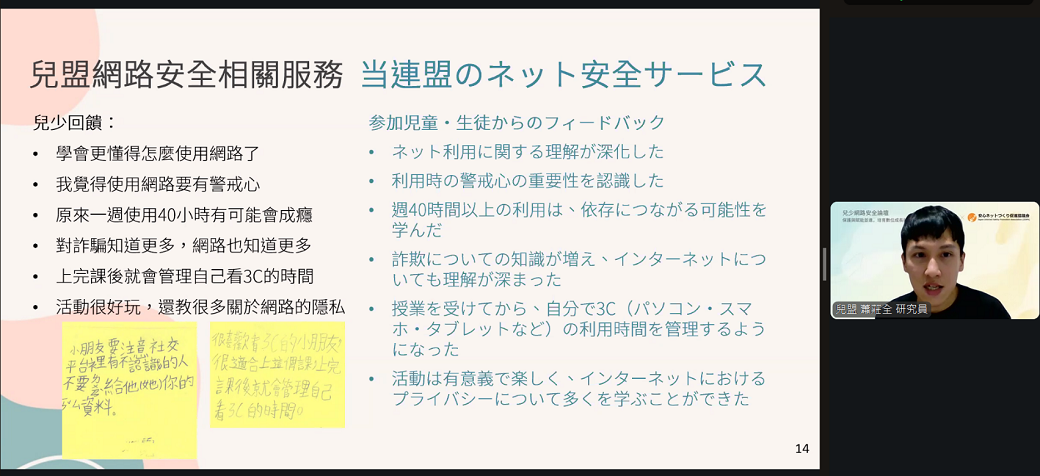
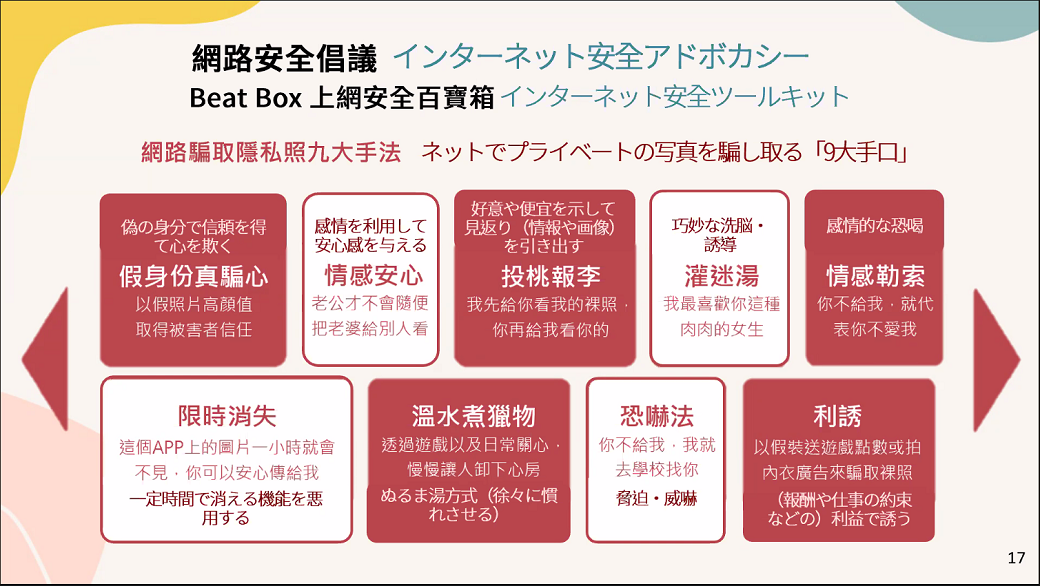
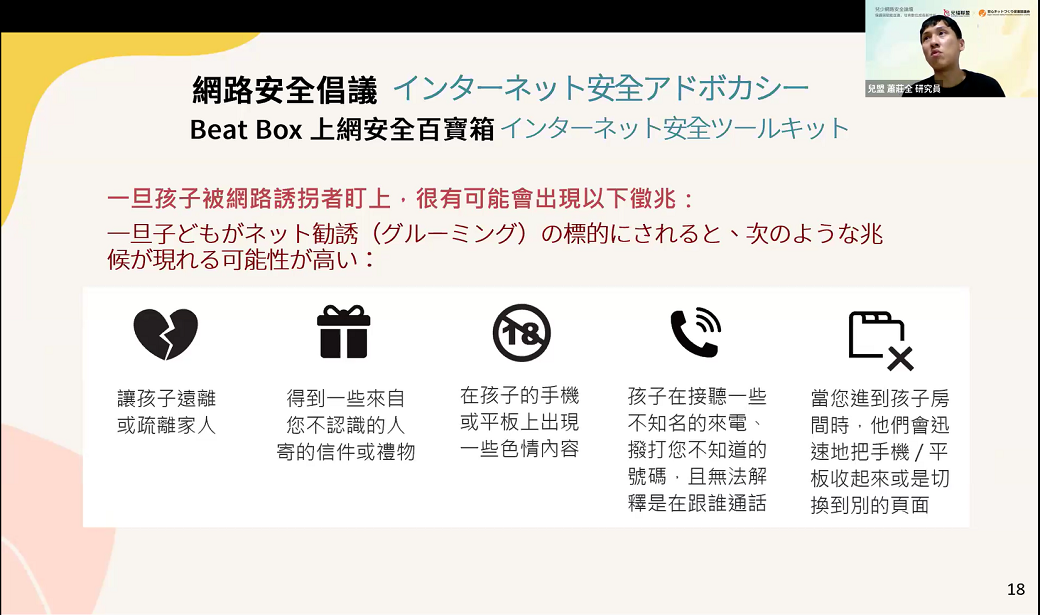
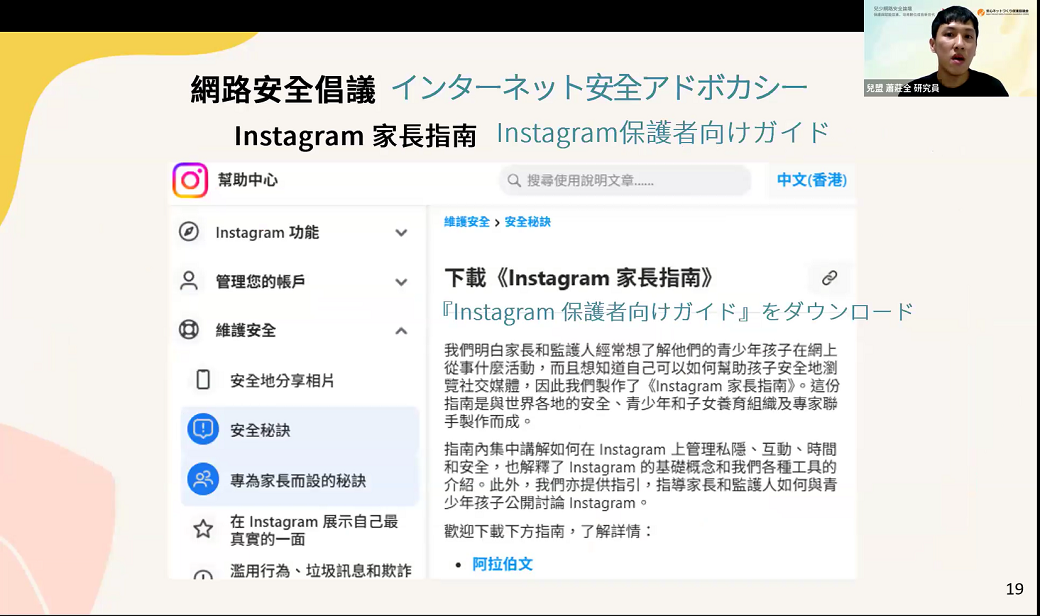
(A) Online Safety Toolkit Beat Box: Developed with reference to Netsafe’s Online Safety Parent Toolkit, this resource is based on the B.E.A.T. framework (Be-Aware, Explore, Agree, Teach). It offers parents practical methods and tools to guide their children’s internet use.
(III) Policy Advocacy and Recommendations
CWLF’s outlook and policy recommendations for strengthening Taiwan’s future legal and institutional frameworks on online safety for children include the following:
A. Establish a Dedicated Authority: Drawing on the example of The UK Council for Internet Safety (UKCIS)’s framework, CWLF calls for the establishment of an independent authority dedicated to online safety for children, supported by a clearly defined mandate and a dedicated budget.
B. Enact Specialized Legislation: With reference to General Comment No. 25 of the Convention on the Rights of the Child (CRC), UK’s Online Safety Act and Online Harms White Paper, as well as the European Union’s Digital Services Act, CWLF recommends introducing a dedicated chapter within Taiwan’s legal framework to safeguard children’s rights to safe communication and the protection of personal data and privacy.
II. JISPA Presentation Highlights from Director Shino Uenuma: An analysis of the evolving online safety challenges facing children in Japan, as well as an introduction to JISPA’s programs and approaches
(I) What are JISPA’s Core Mission and Strategies?
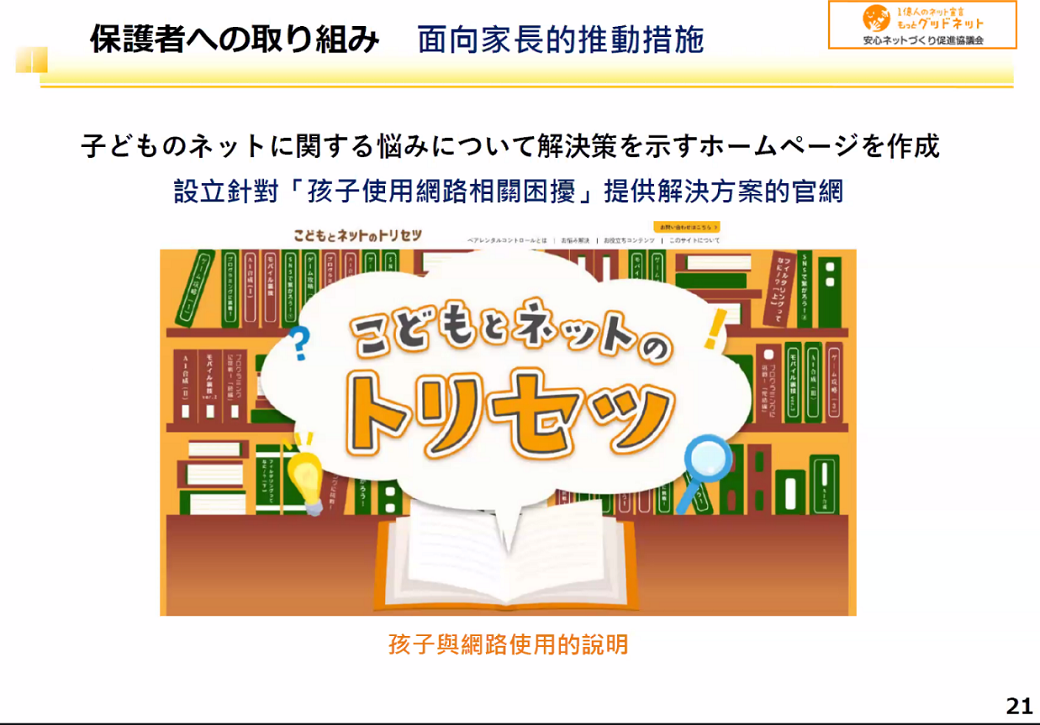
Shino Uenuma, Director of JISPA, explained that the organization’s mission is to enable people to use information and communication technologies (ICT) in informed and responsible ways. To achieve this goal, JISPA’s priority is to make industry and corporate practices more “visible” to the public. Building on this foundation, JISPA works to foster horizontal collaboration across sectors by connecting with a wide range of organizations and stakeholders. Rather than working directly with children, JISPA primarily serves parents, teachers, and institutions responsible for guiding children’s safe and responsible use of the digital environment. Its programs are designed to support children from the final year of kindergarten through the age of 18.
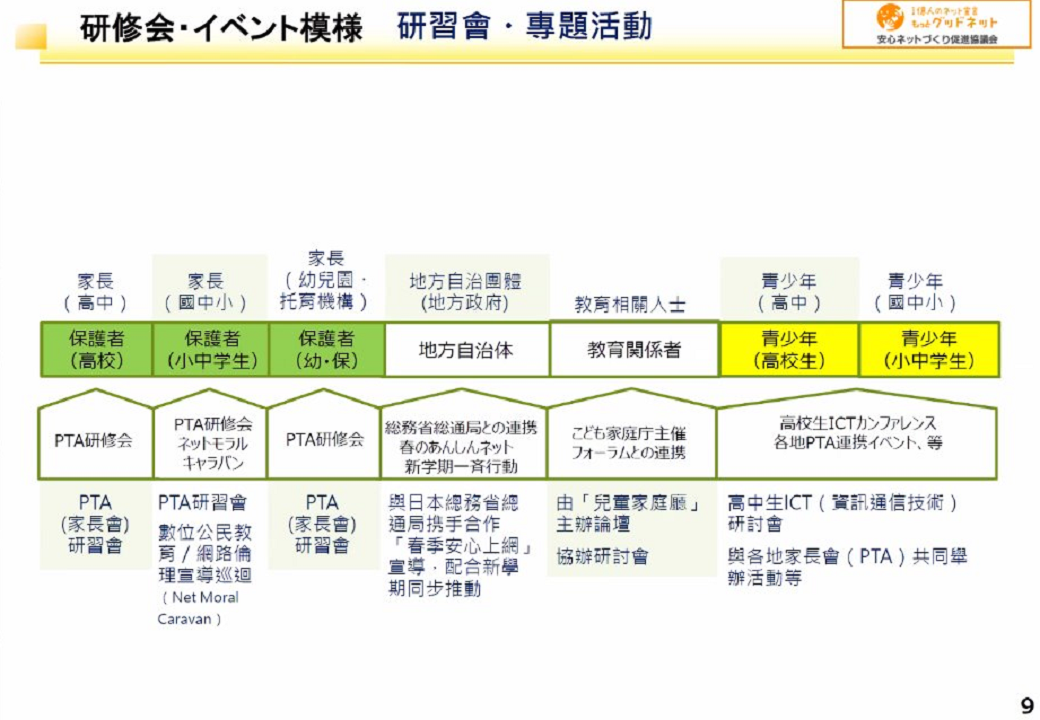
(II) How Does JISPA Carry Out Its Programs in Practice?
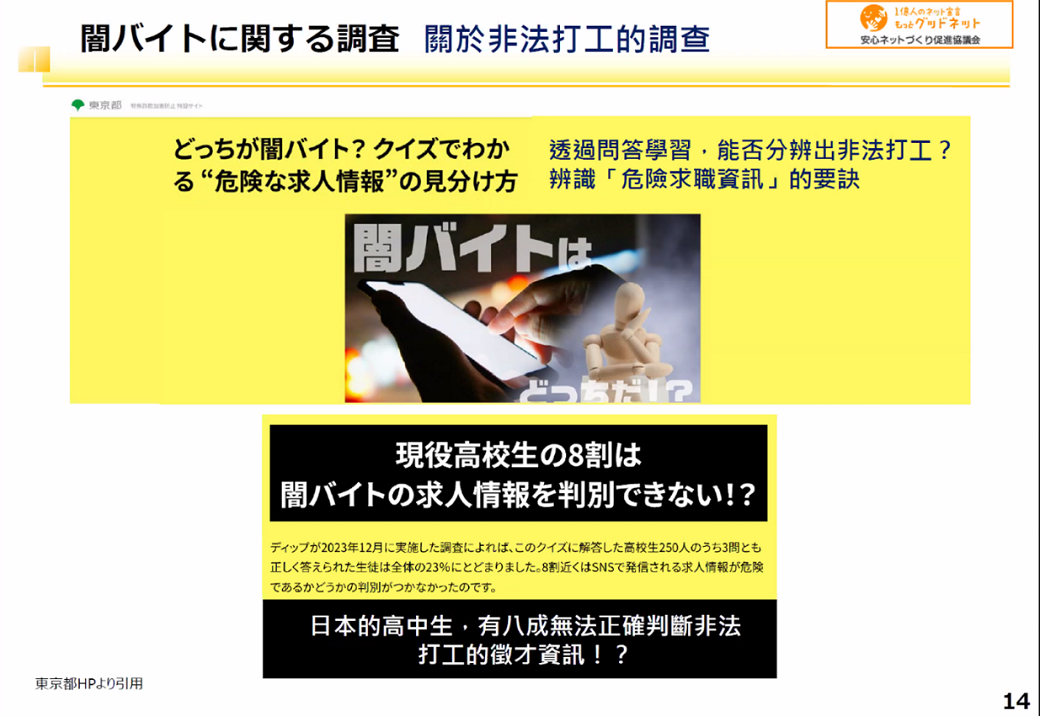
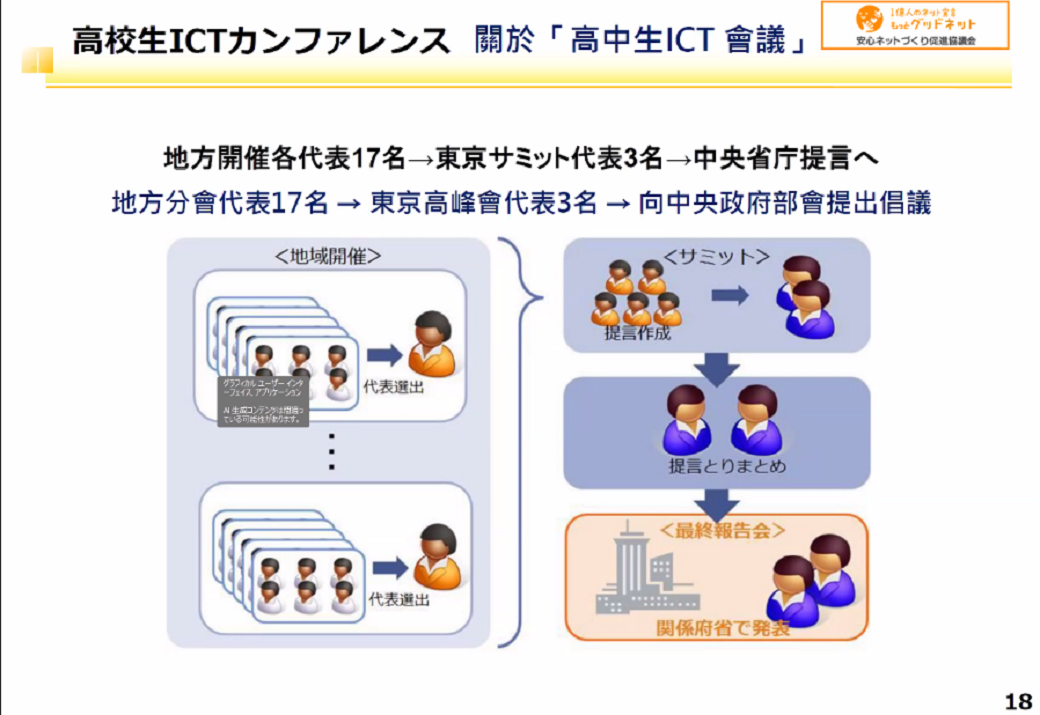
(III) Have JISPA’s Programs Revealed New Approaches to Digital Parenting?