


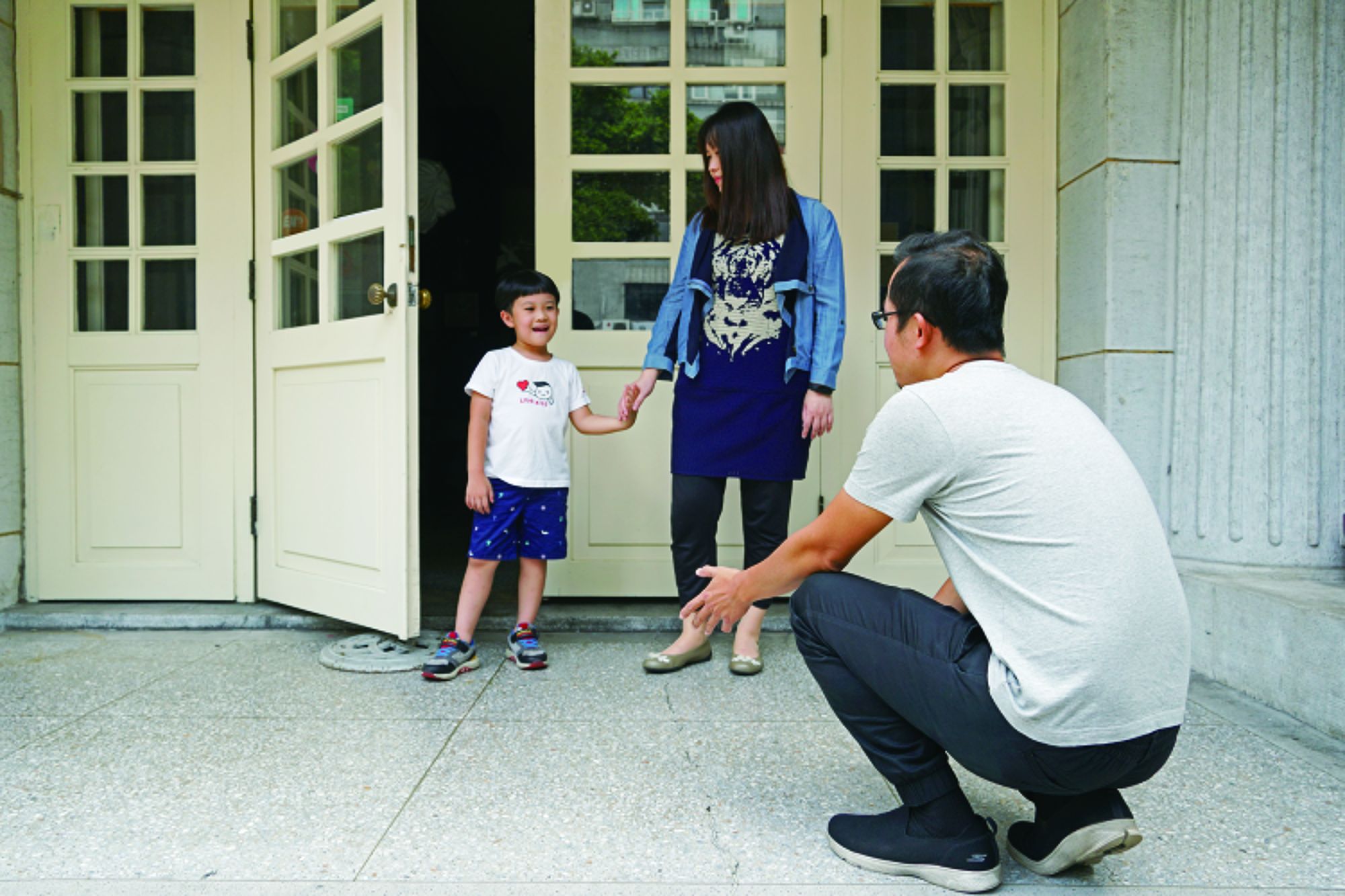
【Post-Separation Support Services】Learning to Truly Say Goodbye
“I don’t really remember my parents ever doing anything bad to me. I only remember every ‘I love you’ they said.”
When Shin’s mom stepped into the consultation room, she had just completed a series of cancer treatments. As divorce followed soon after, she felt exhausted physically and emotionally. In tears, she asked, “why am I the one who was betrayed and the one being divorced. What did I do wrong? What will happen to me and my child?” Shin’s mom was overwhelmed and lost.
“Do you think we could consider divorce as an option?” Shin’s mom looked at the mediator in shock, her eyes wide open in disbelief.
The role of the family mediator is to help the mother move from a passive position to a more balanced one in the relationship. The goal is to revisit and reexamine the meaning of “us” within the marriage. When someone is experiencing the end of a relationship, much of their uneasiness comes from the uncertainty of what lies ahead. In an effort to regain control, a person may try to manage their ex-partner or children more closely, but such attempts often only make the situation more difficult for everyone involved.
To Ensure What’s Best for the Children, We Should Make a Decision That Works Best for Everyone
“Is divorce really the best choice? But I truly can’t go on with this relationship….”
“That’s completely understandable. It’s natural to feel frustrated, especially because this relationship once meant so much to both of you. What matters most now are children, and That’s why we’re here to talk about what decision would be best for everyone.”
Shin’s mom began to cry softly as she opened up and shared more of her thoughts.
With the support of the family mediator, Shin’s mom gradually began to experience a shift in her emotions toward the divorce. She started to reconsider her concerns about child care and practiced how to talk to her children about the decision to divorce. In the end, she and Shin’s dad reached an amicable divorce agreement. Later, when she shared with the mediator how she had informed her children, Shin said, “It’s better for both of you to separate. You’re always fighting, and I just can’t stand it anymore!” Hearing this, Shin’s mom realized how deeply those conflicts had affected her child, causing feeling of fear and anxiety. She also came to understand how important it was for her to the decisions that needed to be made in her marriage.
A New Perspective on Divorce
Divorce does not make someone a bad dad or mom. In reality, a painful and conflicted separation can be far more hurtful to children! When parents are unable to reach an agreement on their own, community-based family mediation offers a compassionate alternative to legal proceedings. Through mediation, parents can work through heightened emotions and stress with the support of the mediator. To ensure that parents have the opportunity to truly understand their children’s needs, CWLF continues to actively promote the inclusion of children’s voices in family mediation. The family mediator will meet privately with the children to learn their expectations following their parents’ separation. The mediator will also explore how children feel about their parents’ continued care for them, and then bring these perspectives back into the mediation process. The goal is to develop a child care plan that reflects the best interests of the child as parents negotiate their divorce agreement. In addition, parents may reach out to CWLF’s Parenting Hotline to speak with social workers about how to support their children through the challenges of divorce.
Starting From the Best Interests of the Child
At CWLF, the best interests of the child guide every aspect of our work, we place children’s rights and feelings at the heart of everything we do. Among the cases we manage for children from single-parent households in Taipei City, two examples stand out.The first case involves a child who runs away at the start of every month. This behavior stems from the child's mother asking them to contact their father to request living expenses.
The second case is one that is often seen in single-parent households. The child misses the non-resident parent, yet also worries about the feelings of the parent they live with. As a result, the child holds back his or her own wishes and needs. This dynamic is known as a “loyalty bind.” When children feel torn in this way, they may communicate differently with each parent. Over time, this emotional conflict can lead children to act and speak differently with each parent, and may also affect their academic performance and relationships with others.
In reality, these problems are not caused by the child at all, but arise because the parents struggle to reach agreements while finalizing their divorce. This places a heavy burden on the child. At CWLF, we uphold children’s rights in every service we provide, with the goal of preventing these difficulties and helping children adjust more smoothly after their parents’ separation.
Separation is Not a Battle for the Children
In addition to providing community-based family mediation services, CWLF’s social workers also serve as Family Matters Mediators for the court. Through this work, we have found that many parents are unaware of the emotional impact that separation or divorce can have on their children. As a result, they often fall into patterns of conflict with the other parent over custody and care arrangements for their children. Parents may not fully recognize the challenges their children face when caught in a loyalty bind, which can lead to conflict and blame when arranging parent–child contact. In many cases, these parental reactions stem from their love for their children, yet they may not fully understand the effects that separation or divorce can bring, nor how to respond to their children’s emotions and needs in a timely way. For this reason, during family mediation, we not only facilitate discussions between parents but also provide parenting education. This includes guidance on how to talk to children about the decision to separate or divorce, how to respond when children resist spending time with a parent, and how to plan for child care after the separation.Helping Children Feel Secure in the Love of Both Parents
When parents are in the process of separation/divorce, it is the child’s right to keep in relationship and contact with both parents. However, one the most common challenges is the difficulty of visitation. Accordingly, we come up with the Accompanied Visitation Services to allow parents and children to have a space for them to interact with each other in comfort.
During separation, it is normal for both parents to experience negative emotions, and these feelings take time to understand, process, and eventually make peace with. While caring for their own emotional needs, parents can also help their children adapt to the changes by taking effective steps—accompanying them through the acceptance of the divorce, continuing to provide steady, healthy love. We also designed our co-parenting education courses and co-parenting support groups. All these considerations inspire the design of the co-parenting education courses and co-parenting support groups.
Over the years, we have continued to advocate the idea that “divorce does not mean a family becomes a single-parent household; it simply means that parents no longer live under the same roof.” Our goal is to ensure that children can have two homes where they are deeply loved and cared for. Through our Post-Separation Support Services—including Family Mediation, Mediation, Accompanied Visitation, Co-Parenting Education, and Children in Separated Families Support Services—we aim to help children continue receiving love and support from both parents even after the separation.
Website: https://www.children.org.tw/goodbye
⬛ More CWLF stories:
【Family in Adversity Services】From Storm to Strength: How Fang-Fang's Family Found Hope Again
Event Highlights—International Conference on the Child's Voice in Family Law Cases
2024 Conference on Building a Child-Friendly Co-Parenting Model for Divorced Families